
Cycling betting odds: what the prices actually pay on road racing
 Available in US
Cycling is not a sport where the favourite tends to be wrong. On a flat sprint stage, a pure climber at altitude, or a time trial decided by seconds across forty kilometres, the order the betting market lays out usually mirrors the order the road would finish in. What a betting slip buys on cycling is therefore not so much a hot tip as a price. The market on a Tour de France stage is denser than on a midweek track meeting and weaker than on a Premier League Saturday, and the difference shows up in the margin the book builds into every line. This page is about that price: how the major UK bookmakers build it, what they offer on Grand Tours and WorldTour one-day races, and what the headline number actually returns when a bet wins.
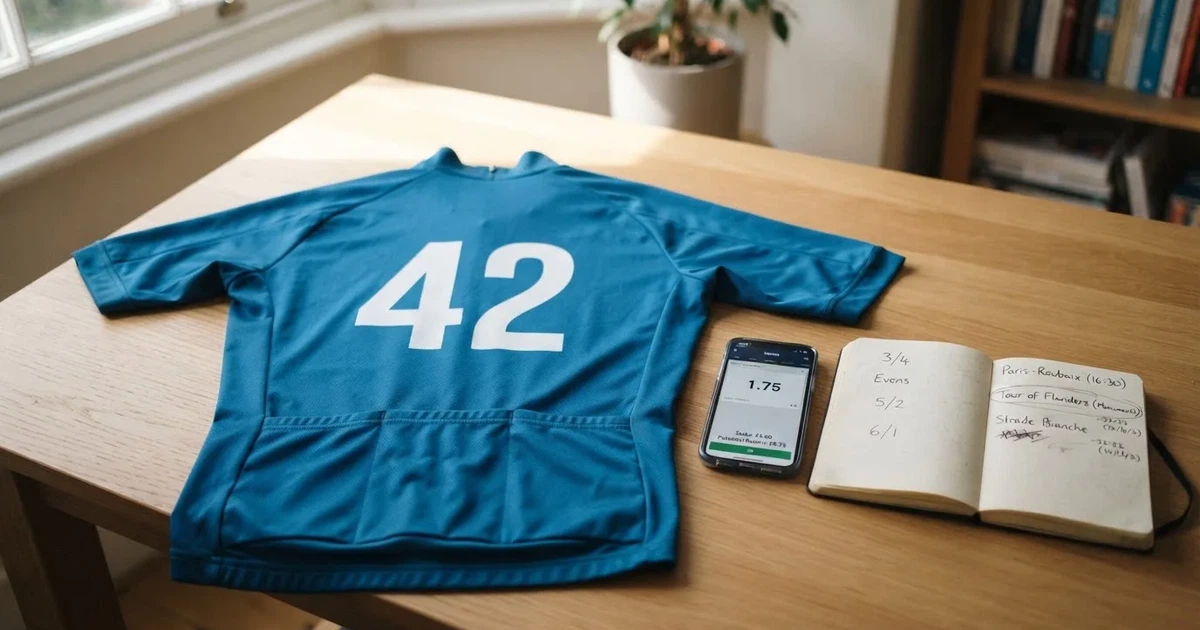
Curated as of October 30, 2026 and verified against the Gambling Commission’s public register for Great Britain.
What a cycling betting market actually is
A cycling betting market is a bookmaker’s offer to back a particular outcome on a particular race, sometimes before the race starts and sometimes during it. The two prices on any two-way market, a favourite and an outsider, contain everything the reader needs to know about what the book is doing, so they are worth understanding before any operator comparison.
The two numbers behind every line
For the simplest case, a two-way market on who wins a particular one-day WorldTour race, the bookmaker publishes two decimal odds. Each price expresses the return per unit staked, stake included. A price of 2.50 returns £2.50 for every £1 staked if it wins — the original £1 plus £1.50 of profit. A price of 5.00 returns £5 for every £1 staked. A price of 1.50 returns £1.50 for every £1 staked, of which the punter keeps 50p of profit after the stake.
The bookmaker does not pay the full £2.50 from their own pocket on every winning bet. Each price is the result of a calculation the book runs over every possible outcome of the market, then trims to keep a margin. On a two-way market the arithmetic is at its most transparent: take the implied probabilities of each side, add them together, and the sum will be slightly above 1.000, often 1.05 to 1.10. The size of that overshoot is the margin — the share of every pound bet that the book keeps in the long run, before running costs and operator tax.

For an example, consider a two-way match result market at decimal prices of 1.90 against 1.90. The implied probability of each side is 1 ÷ 1.90, or roughly 0.5263. Adding the two gives about 1.0526, so the payout share — the slice of every pound staked that returns to bettors on average — is roughly 1 ÷ 1.0526, around 95.0%, and the margin is the remaining 5.0%. That figure is the cost of placing a bet. Across a thousand £1 bets at those prices, the book would keep about £50 of the £1,000 handled in the long run and the rest would go back to winning bettors. The maths carries across sports, races and operators with only the percentages changing.
This is one number, not all of them, and the band matters. On a heavily backed Premier League match the margin can sit at 2% to 4%. On a niche Olympic sport with few runners it can climb to 8% or higher. Cycling sits in the middle: the Grand Tours attract enough liquidity to keep margins competitive, while smaller WorldTour one-day races and second-tier stage events lean on a shorter form, and the price loses a percentage point or two to cover the book’s risk on a field it has modelled with less conviction.
Why the same race can carry a dozen different markets
The “winner” market is one of the more than a dozen a bookmaker may run on a single Tour de France stage, and each market carries a margin of its own. A stage winner market with twelve named favourites sees all the runners priced, and the overshoot across all of them sits at 5% to 7% on a Grand Tour. A head-to-head between two named riders, where the bet is just on which of the two finishes ahead, typically runs at a tighter margin — 3% to 4% — because the book is only modelling two outcomes. A group winner market, asking which rider from a named group of four or five finishes highest, runs at a wider margin again because the book is implicitly betting on several runners but only offering one ticket.
The bookmakers also price in different ways: some work from a base model and adjust on the day as team news and weather settle, others lean on exchange data and shadow the prices of Betfair and Smarkets. The reader sees only the headline number, but two odds can differ by a few percentage points on the same market without either being a mistake. The market structure is the variable, and a cycling line is rarely as simple as a football one.
The shape of a Grand Tour betting card
The Grand Tours — the Giro d’Italia, the Tour de France and the Vuelta a España — are the longest and most heavily bet events on the cycling calendar, and they are where the catalogue of markets gets widest. A headline winner market, a market on each stage winner, and a market on the overall General Classification winner sit at the core. On top of that the bookmakers typically offer a King of the Mountains winner market, where the polka dot jersey at the Tour or the maglia azzurra at the Giro is the prize, points classification winner markets, a young rider classification on each tour, and stage-by-stage head-to-head match bets between named riders.
The volume of cycling betting is concentrated in the three weeks of a Grand Tour. Outside those windows the offering thins to the Spring Classics, the one-day WorldTour Monuments and the major stage races earlier in the calendar. The volume of money follows the popularity of the event, and the volume of money dictates how tight a price the book can run. That concentration has consequences for a reader comparing operators: the same brand that runs a 5% margin on a Tour de France stage may run a 7% margin on a Tour of California stage, simply because fewer bets mean the book needs a wider cushion to cover its risk.
Stage betting versus outright betting
Two kinds of bet on a Grand Tour are worth distinguishing, because the margin is built differently on each. An outright bet on the General Classification winner is a single selection on a three-week race: the book evaluates each rider’s chance of finishing the highest of all twenty-three teams’ leaders, sets a price, and trims for margin. The probability of any one rider winning is small, so the price tends to be long — Tadej Pogačar was priced at a short number for the 2026 Tour, but the second tier of riders tends to start at decimal odds of 8.00 or more, often 15.00 or higher once the field is named. The book handles longer prices with less vig because the vig bites hardest on short-priced favourites.
A stage bet is a one-day proposition: who crosses the line first on a particular stage. The field is smaller, the form book sharper, and the price on the favourite tighter. A sprint stage typically has two or three riders priced below 5.00, with the rest of the peloton at 25.00 or longer. A mountain stage that ends at altitude in the high Pyrenees may have only one or two riders under 5.00 and a much longer tail. Both kinds of bet live on the same racing, but the arithmetic behind them is different, and a cycling bettor comparing odds needs to know which market is being priced.
The legal frame that governs a cycling bet in Great Britain
The legal question on cycling betting in the UK is not whether the sport can be bet on — it can, on a fully licensed site, with no statutory list of permitted markets — but who has the licence to take the bet and what rules they are running under.
The Gambling Commission and the licences it issues
The Gambling Commission is the regulator of commercial gambling in Great Britain, sponsored by the Department for Culture, Media and Sport and operating under the Gambling Act 2005. Its remit covers England, Scotland and Wales. Northern Ireland is outside the Act and runs under its own older legislation, so a GB-licensed operator does not thereby hold a Northern Ireland licence.
Since the Gambling (Licensing and Advertising) Act 2014 took effect, an operator whose remote facilities are used in Great Britain needs a Commission licence, wherever the operator is based. A Curaçao or Malta licence is not a substitute for taking bets from a punter sitting in London. Where the operator offers bets on real sporting events online, the relevant licence is a remote general betting standard (real events) licence; where it offers a betting exchange, the licence is a remote betting intermediary licence; where it offers pool betting on horses or dogs, that is a separate pool betting licence. A single operator may hold several licences at once, and several brands can run under one licence from a single licensee. The Commission’s public register can be searched by business name, trading name, domain or account number, and the reader who wants to know whether the operator on the betting slip is licensed looks there. The domain proves nothing: a licensed operator may use a .com domain, and an unlicensed brand may use a .co.uk one.
The minimum age for any gambling product is 18. Since 7 May 2019 licensed remote operators have been required to verify the customer’s name, address and date of birth before the customer can deposit, gamble or even claim a free bet or bonus. Anonymous play at a licensed site is no longer available.
In-play cycling, pool betting and exchange rules
In-play betting on cycling is offered by UK bookmakers, including during stages of a Grand Tour as the race unfolds. There is no statutory prohibition; the rule sits in the operator’s licence conditions and the customer-protection duties of the LCCP. The reader should not assume in-play is “unrestricted” in any legal sense — operators can and do suspend markets on individual stages — but it is offered.
Betting exchanges operate under a separate licence type. Matchbook, the one exchange that appears in the comparison below, holds a remote betting intermediary licence and is regulated through the Commission’s exchange requirements. Exchange-specific rules — commission rates, lay liability, market-making behaviour — are set out in each exchange’s terms.
Spread betting on a non-financial product, where the gain or loss is not linked to a financial instrument, is inside the Commission’s remit under a general betting licence and is taxed under General Betting Duty. Where spread betting is on a financial instrument, it is regulated by the Financial Conduct Authority, not the Commission. The reader looking at a spread bet should know which regime applies.
What a cycling betting offer can and cannot do
The Commission does not list permitted sports or permitted markets. A licensed operator decides what to offer under its own rules and within the LCCP. Esports and virtual events are treated as separate categories under separate licence heads. Politics, TV shows and novelty markets are offered by GB bookmakers and no statutory prohibition was found. What restricts a cycling market in practice is not a statute but the operator’s commercial judgement — how much liquidity the event attracts, how confidently the book can model the field, and what margin the market will bear.
Two specific rules shape how a cycling offer is structured. First, since 19 January 2026 the LCCP caps wagering requirements on bonuses at 10x: a £10 bonus cannot require more than £100 of qualifying bets before the bonus and any winnings can be withdrawn. That cap applies to bonuses, not to every promotion. Second, mixed-product promotions — an offer that requires a bet on cycling in order to trigger a casino or bingo reward, for example — are banned under the same rules. A cycling bettor comparing operators should keep both rules in mind, especially when the welcome offer is the headline reason to sign up.
The offshore question and what it costs the reader
A GB licence is compulsory at the point of consumption. An operator providing gambling facilities to a customer in Great Britain without the licence the Act requires is committing an offence under section 33 of the Gambling Act 2005. The Commission’s enforcement is disruption rather than blocking — cease-and-desist notices, work with payment providers, search-engine referral adjustments, and court-order DNS powers that have been granted or are about to be granted. What the customer who chooses an offshore site loses is not access, which is not in itself illegal, but the British consumer-protection suite: no GAMSTOP coverage, no approved dispute-resolution body, no complaints route to the Commission, no British redress if funds are withheld, no cap on bonus wagering under the new rules, and no automatic financial vulnerability check. Honest framing on either side: a licensed brand means verification before the first bet, capped bonus wagering, a deposit-limit framework, and a regulator behind the customer; an offshore brand means none of those safeguards and the money goes further or stays stuck, depending.
How to compare cycling bookmakers honestly
The reader who actually places cycling bets looks at several qualities of an operator. Whether the quality is supported in writing, how it is worded, and what to check before staking on it is the subject of this section.
Markets on offer
A bookmaker with serious cycling coverage prices outright General Classification winner, points classification winner, King of the Mountains, Best Young Rider, every individual stage, and a set of head-to-head match bets. It also offers in-play pricing during a Grand Tour stage. A bookmaker with thin coverage offers the headline winner market on a few races and little else. The reader who wants more than a one-off punt on the Tour winner looks for the brand that has built a full Grand Tour card, including daily stage action.
The margin and the published price
The most useful thing a reader can do with a cycling odds comparison is stop comparing headline prices and start comparing margin. Two brands offering 4.00 and 4.20 on the same rider are not offering the same bet to the same reader. The brand running a tighter overround is the better price on average; the difference between 4.00 and 4.20 is 5%, and 5% over a long enough track record of bets is the difference between a winning and losing hobby. The downside is that the margin a book is running is not printed, so the reader has to do the arithmetic on a sample market or trust the comparison when it is given.
Streaming, in-play and settlement speed
A Grand Tour bet is rarely settled the moment the rider crosses the line. The official result has to be ratified, and the Lloyds of London insurance market that bookmakers sometimes use to handle large payouts takes time. A brand that settles a Grand Tour winner within an hour of the official result is fast; a brand that takes until the next morning is slow. In-play on cycling is offered on Grand Tour stages and a few Classics, but rarely on a Tuesday-night WorldTour track race. Streaming, where the brand holds the rights to a feed or licenses one from a third party, raises the level of the experience but is not the same as market depth.
Bonuses, terms and the wording that actually costs
A welcome offer on cycling tends to look generous on the surface. The cost is in the terms. Minimum odds for qualifying bets, minimum number of selections in an acca, time limit on the offer, cap on free-bet returns, qualifying bet refund as free bet rather than cash, maximum stake under wagering — these are the lines the reader who acts on a bonus must read. The 10x wagering cap of the LCCP limits but does not eliminate the cost; the dead heat between an offer that requires a £10 accumulator at minimum combined odds of 4/1 with three or more legs, settled within seven days, and an offer that requires a £25 first bet on any single market at minimum odds of 1.60 with no further condition, is the difference between a one-day offer and a one-week offer. The reader who values simplicity chooses the brand with the cleaner terms; the reader who values headline value chooses the brand with the larger but more conditional pot.
Payments in and out
The cycling punter uses a payment method that works the way their bank works. A debit card deposit limit of £5, an Apple Pay deposit limit of £5, a PayPal deposit limit of £20, a Trustly or Skrill deposit limit of £5 — these are all common floors on UK-licensed books. The reader using bank-based payment methods should expect the deposit to clear, the offer to credit, and the withdrawal to take between one and five working days, faster on e-wallets and slower on the first bank transfer to a new account. The credit-card ban for gambling has been in force since April 2020 and covers credit-card-funded payments through an e-wallet, so the punter paying with a Visa Debit is fine and the punter paying with a Mastercard credit is not.
The Tour de France and the cycling calendar the book covers
Cycling betting lines up with the sport’s calendar. A bookmaker running a full card across the year prices around fifty weekends of meaningful racing, eleven one-day WorldTour Monuments, two or three week-long stage races a month from January to October, and the three Grand Tours. The reader looking for value on cycling bets when each tour is on, and learns to expect a thinner card between Tours.
The Grand Tours and their place in the year
The three Grand Tours are the Giro d’Italia, held first in 1909 and run in May; the Tour de France, held first in 1903 and run in July; and the Vuelta a España, held first in 1935 and run in late August and into September. Each is run under UCI rules that allow them to last between 15 and 23 days, with two rest days typically included in the schedule. The General Classification leader wears a pink jersey at the Giro, a yellow jersey at the Tour, and a red jersey at the Vuelta, on top of the points classification and mountain classification jerseys at each race. The route is announced months in advance for the Tour and slightly closer in for the Giro and the Vuelta, with the full start list of twenty-three teams published a week or so before the race.
The 2026 Tour de France ran from 4 July to 26 July 2026, starting in Barcelona with a team time trial and finishing on the Champs-Élysées in Paris, over twenty-one stages and 3,245 kilometres. Tadej Pogačar of UAE Team Emirates, riding for Slovenia, won the race for what was recorded as his fifth Tour victory. The Giro and the Vuelta run on their own calendars within the same year, with the Giro’s start set for the May before the Tour and the Vuelta set for late August after the Tour, and the bookmakers price all three in their outrights and stage cards.
WorldTour races between the Grand Tours
The UCI WorldTour is the top tier of men’s road cycling. Originally created in 2005 as the ProTour and renamed the WorldTour in 2011, the WorldTour includes the Grand Tours, a calendar of one-day Monuments and stage races, and the men’s and women’s road world championships held annually under the UCI, which has governed road cycling since 1900 from its base in Switzerland. The Monuments — Milan–San Remo, the Tour of Flanders, Paris–Roubaix, Liège–Bastogne–Liège, the Tour of Lombardy and, in some years, a women’s Monument for each — are the most heavily bet one-day races outside the Grand Tours, and the WorldTour stage races such as Paris–Nice, Tirreno–Adriatico, the Critérium du Dauphiné and the Tour de Romandie are the week-long events a cycling bookmaker prices between the Grand Tours.
The reader who wants action between Grand Tours is buying into a thinner market. The card that the same book ran for a Tour de France stage will be slimmer for a Tour de Romandie stage, and the margin will tend to be a percentage point or two wider. The pricing reflects liquidity, not a change in skill.
Olympic and world championship cycling
The Olympic road race and the men’s and women’s road world championships are the calendar’s one-off highlights. The men’s world championship road race has been held since 1927 and the women’s since 1958; both are now scheduled separately from the Olympic road race, with the Olympic event held in the Olympic year only. The Olympic road race carries an unusual feature in betting: a national team race rather than a trade team race, so a rider normally backed as a domestique for his trade team leader becomes a leading light of his national squad and can attract a tighter price. The Olympic time trial is priced both as a medal market and as a head-to-head market between named riders.
What the book does not price
The bookmaker does not price everything. Track cycling, BMX, mountain bike and cyclocross are run by the UCI under separate world championships. The books price a small subset of each — track omnium at the Olympics, mountain bike cross-country at the Olympics — and they ignore the rest. The reader looking for a bet on a track Six Day race or a cyclocross World Cup round will not find a market at the licensed bookmakers covered here. Where they find a market, the margin is wide because the betting public has not followed the discipline deeply enough for the book to run a tight price.
Comparing the UK bookmakers with cycling markets
The brands reviewed below all hold a Gambling Commission remote licence for real-event betting, all operate under the LCCP and the same bonus cap, and all settle in pounds sterling. The differences are in catalogue depth, margin sharpness, payment floor, settlement speed and the live-streaming that comes with each card. The reader who values catalog depth will look at the brands that publish the deepest Grand Tour card; the reader who values price will look at the brands that publish the tightest margin on a sample market; the reader who values simplicity will look at the brands that publish the fewest conditions on a welcome offer.
| Brand | Gambling Commission remote licence | Holder of the licence | Cycling offer and qualifying terms |
|---|---|---|---|
| DragonBet | 64908 | DragonBet Ltd | Welsh football and rugby markets with racing, American football, in-play and bet builder markets noted on the published app; cycling pricing depth is not documented under the brand’s published terms. |
| Fafabet | 57385 | Taichi Tech Limited | Best Odds Guaranteed on UK and Irish horse racing win and each-way bets from 9am on race days, paying the bigger of the original price and the starting price; cycling is offered but no publicly stated cycling-specific terms were published. |
| Betboro | 44181 | Webmedia Development N.V. | Sports welcome offer is a 100% matched free bet of up to £25 on the first qualifying wager, requiring a debit-card deposit of at least £10 and a first bet of £5 to £25 with at least three selections each at decimal odds 1.60 or higher. |
| Matchbook | 39504 (incl. remote betting intermediary) | Triplebet Limited | Betting exchange where customers bet against other users, with Bet Builder, multiples, in-play betting and live streaming of horse racing and greyhounds; cycling markets are exchange-priced and follow exchange liquidity. |
| Spreadex | 8835 | Spreadex Limited | Combines fixed-odds and spread betting in one app, with one-click, automatic and partial cash out, Bet Builder across fixed odds or spreads, and live streaming of UK and Irish horse racing, greyhounds, tennis, NFL and selected football; spread betting losses can exceed the deposit. |
| DAZN Bet | 48756 | DZBT Limited | Deposits start at £5 by debit card, Apple Pay, Paysafecard, Trustly and Skrill, and at £20 by PayPal, with no processing fees; cycling is offered but no publicly stated cycling-specific terms were published. |
| Bet Ahoy | 100094 | Bet Ahoy Ltd | Welcome offer is “Bet £10 & Get £10 in Free Bets”, made up of a £5 sports bet and a £5 accumulator; cycling is offered but no publicly stated cycling-specific terms were published. |
| London Bet | 66162 | Thistle Bet Limited | Combines sports betting — football, tennis, horse racing, greyhounds, darts, golf, cricket, NFL, NBA, MLB and snooker — with Pragmatic Play casino slots and live in-play betting; cycling is offered but no publicly stated cycling-specific terms were published. |
| 10bet | 43173 | Blue Star Planet Limited | Sportsbook covers football, tennis and horse racing with Cash out, Bet Builder and Live Streaming; cycling is offered but no publicly stated cycling-specific terms were published. |
| Hollywoodbets | 53028 | Hollywoodbets International UK Limited | Sports welcome offer refunds the stake as a free bet of up to £30 on the first qualifying losing accumulator, requiring a stake of £10 or more, three or more legs, combined odds of 4/1 or greater, and settlement within seven days; one free bet per customer. |
The rows are not a ranking. They describe ten operators licensed in Great Britain, and the differences are in how each operator chose to publish its terms on its own pages.
DragonBet — Welsh-rooted book with a deep British card
DragonBet is operated under Gambling Commission remote licence 64908 by DragonBet Ltd. The published app shows markets on Welsh football and rugby, racing and American football, with in-play betting and a bet builder across several sports, and the license status can be confirmed against the Commission’s public register. Cycling is offered as part of the general sports list, with no publicly stated cycling-specific minimum stake, minimum odds or acca insurance terms; the cycling card is read directly off the operator’s Wettprogramm by the bettor who wants the depth.
The strength of the brand is local British sport, with Welsh leagues and tournaments priced alongside the international card. The detail on cycling is harder to evaluate from published terms alone, and the dedicated reader who wants a cycling price on a Tour of California or a Tour de Suisse stage would check the operator’s racing page on the day.
Fafabet — Best Odds Guaranteed on horses, deeper cycling terms unstated
Fafabet is operated under Gambling Commission remote licence 57385 by Taichi Tech Limited. The published terms state that Best Odds Guaranteed applies to UK and Irish horse racing win and each-way bets from 9am on race days, paying the bigger of the original and starting prices. The cycling offer is part of the general sports list and is not described in greater depth in the brand’s published terms.
The headline feature is a racing-anchored safety net for the punter who backs a horse on the morning of a race and is paid the higher price. Cycling terms are not described in the same volume of conditions.
Betboro — the headline-matched welcome offer with three-leg minimum
Betboro is operated under Gambling Commission remote licence 44181 by Webmedia Development N.V. The headline sports welcome offer is a 100% matched free bet of up to £25 on the first qualifying wager, requiring a debit card deposit of at least £10 and a first bet of £5 to £25 with at least three selections each at decimal odds 1.60 or higher. The qualifying bet is therefore a small accumulator, and the operator is betting that the punter will accept a more complex first bet than a single.
The condition is plain. Three legs at minimum odds of 1.60 each gives a combined minimum price of 1.60 × 1.60 × 1.60, or 4.096. The punter looking for an honest first bet, with no further acca leg, will find the offer is not built for them. The punter looking for a fund to back a Saturday acca will find £25 in free bets a useful addition to a bankroll if they were already placing one.
Matchbook — the betting exchange with a thin commission model
Matchbook is operated under Gambling Commission remote licence 39504 by Triplebet Limited, including the remote betting intermediary categories that allow the brand to run an exchange. The published feature set is Bet Builder, multiples, in-play betting and live streaming of horse racing and greyhounds. The exchange model is the structural difference: the punter is betting against other users rather than against the book, and the brand’s profit is the commission on winning nets, not the margin on prices.
Exchange prices on cycling are sharper than bookmaker prices at high liquidity moments — a Tour de France stage winner market with a three-figure field of matched bets will price each rider close to true probability once the market settles — but thinner the rest of the time, and the bettor who prices a small WorldTour one-day race on Matchbook will find smaller matched volumes and wider spreads than on a flat Premier League market.
Spreadex — fixed odds and spread betting under one roof
Spreadex is operated under Gambling Commission remote licence 8835 by Spreadex Limited. The published feature set combines fixed-odds and spread betting in a single app, with one-click, automatic and partial cash out, Bet Builder across fixed odds or spreads, and live streaming of UK and Irish horse racing, greyhounds, tennis, NFL and selected football. The brand is regulated by the FCA for spread betting and by the Gambling Commission for fixed-odds betting, and the published terms make clear that spread betting losses can exceed the deposit.
The cost of spread betting on a cycling index is structural. A buy on the brand’s own index at 30 to 35 cents with a stake of £2 a point delivers £70 of profit if the index settles at 65, but a sell on the same range delivers £70 of profit if the index settles at 30. The bettor’s loss is uncapped in both directions up to the index range the brand has quoted.
DAZN Bet — low deposit floors and a wider payment mix
DAZN Bet is operated under Gambling Commission remote licence 48756 by DZBT Limited. The published deposit terms state that deposits start at £5 by debit card, Apple Pay, Paysafecard, Trustly and Skrill, and at £20 by PayPal, with no processing fees. The deposit floor of £5 on most methods is the headline feature for the punter with a small bankroll or a preference for testing the brand with a small first deposit. Cycling is offered on the main sports list, with no publicly stated cycling-specific terms beyond the deposit floors.
A small deposit is welcome on a brand the punter is testing, but the small first deposit also caps the qualifying bet for most welcome offers, and the punter chasing a high headline free-bet pot is likely to look elsewhere.
Bet Ahoy — a punchy two-part welcome bundle
Bet Ahoy is operated under Gambling Commission remote licence 100094 by Bet Ahoy Ltd. The published welcome offer is “Bet £10 & Get £10 in Free Bets”, made up of a £5 sports bet and a £5 accumulator. The two-part split is the headline, and the operator is structuring the welcome around a single bet on one market and a separate accumulator on another.
The cost of the welcome is moderate. The £5 sports free bet is used on the punter’s choice, and the £5 acca free bet has its own minimum price or leg count that the punter reads in the offer’s terms. Neither pot is large enough to be a bankroll on its own, but either is a useful second position alongside a bet the punter was already planning.
London Bet — the football-anchored sportsbook with a casino bundle
London Bet is operated under Gambling Commission remote licence 66162 by Thistle Bet Limited. The published app combines sports betting — football, tennis, horse racing, greyhounds, darts, golf, cricket, NFL, NBA, MLB and snooker — with Pragmatic Play casino slots and live in-play betting. The brand’s strength is the breadth of the football pricing, with tennis, golf and cricket in support; cycling is offered but is not the centrepiece of the card.
The mix of sportsbook and casino in one wallet is the structural feature. The punter looking for a casino balance while pursuing a sports position can move funds without a separate account, and the published brand literature reflects that combined offering.
10bet — Cash Out and Bet Builder on a focused card
10bet is operated under Gambling Commission remote licence 43173 by Blue Star Planet Limited. The published sportsbook covers football, tennis and horse racing, with Cash out, Bet Builder and Live Streaming. The card is a focused one, with the headline sports priced and the rest of the sportsbook filled out from a less detailed catalogue.
The features are the headline. Cash out across a Grand Tour stage in running is a structural plus when the punter wants to take a profit before the day is decided, and a Bet Builder across a cycling market — assuming the brand supports cycling in the builder — is a useful facility for a multi-outcome view of a stage.
Hollywoodbets — the refund-on-losing-accuma welcome
Hollywoodbets is operated under Gambling Commission remote licence 53028 by Hollywoodbets International UK Limited. The published sports welcome offer refunds the punter’s stake as a free bet of up to £30 on the first qualifying losing accumulator, requiring a stake of £10 or more, three or more legs, combined odds of 4/1 or greater, settlement within seven days, and one free bet per customer. The offer is structured around the punter’s first losing acca, so the brand assumes the acca wins, and the offer is a safety net that costs nothing in the case of a win.
The cost of the offer is conditional. A punter who would have placed a £10 three-fold acca anyway gets a £30 free bet back as a loss-leader; a punter who would otherwise have placed a single bet must acca up to qualify. The seven-day settlement window is also short.
What the comparison actually tells the reader
Each operator write-up above stops after the licence, the headline offer and the structural feature the brand brings to the comparison. The substance is in the differences, not in the list.
The largest structural difference is at Matchbook. As an exchange, it does not set the prices itself; the prices are set by users betting against each other, and Matchbook’s profit is commission on winning nets. That model produces the sharpest cycling prices at peak liquidity, and the worst prices at low liquidity. The punter who follows a Grand Tour every July gets a sharper product at Matchbook than at any of the other ten brands; the punter who wants a price on a Tuesday Tour de Yorkshire stage gets a less reliable one.
The next structural difference is at Spreadex. The brand is the only one in the comparison offering spread betting alongside fixed odds, and the spread model is a structurally different risk profile. The punter who understands the index range and accepts the wider loss ceiling is using a different instrument. The punter looking for a simple fixed-odds book should look at the other nine brands.
The remaining eight brands are flat-odds bookmakers on a similar regulatory footing. The choice between them is one of welcome offer terms, payment floors, the size of a Grand Tour cycling card, and the speed at which the brand settles a winner. The punter looking at the headline matched welcome should note that Betboro’s £25 matched free bet with three legs at minimum 1.60 is conditional; the punter looking at a small deposit floor should note that DAZN Bet’s £5 floor on most methods is the lowest in the comparison.
How the book’s margin sits inside the odds
Margin is what the book keeps on average. The reader who sees two prices and wants to know which is sharper can do the calculation directly on a two-way market.
For an illustrative example, take a two-way match result market at decimal prices of 1.90 against 1.90. The implied probability of each side is 1 ÷ 1.90, or about 52.63% on each side. Adding the two gives about 105.26%, which is the bookmaker’s overround, the total margin as a percentage of stake. The payout share — what returns to bettors in the long run — is 1 ÷ 1.0526, or about 95.00%. The bookmaker’s margin, in other words, is in a band around 5.00% on those prices. That is one example, not all examples; the margin on a real cycling market will be drawn from the published prices on race day, and the calculation is the same shape with different numbers.
The margin on a real bookmaker’s odds will rarely sit at exactly 5% on every market. On a heavily liquidity-supported Grand Tour stage the margin can fall to 3% on the headline match odds and rise to 6% on niche markets like which of two named domestiques finishes higher. On a smaller race the same bookmaker may publish 7% to 9% on every market, simply because the book has modelled a less-traded field. The shape of the margin across the catalogue is what makes the comparison sharper than a side-by-side of any two published prices.
A cycling bookmaker running a 4% margin on a Tour de France match odds market is publishing better prices than one running 6% on the same market. The 2% difference compounds over a season of bets; on 250 single bets of £20 a bettor who consistently takes the sharper brand is keeping £100 of stake that the wider-margin brand has eaten in the long run. The bettor who cannot do the calculation on every market uses published margin rather than headline price as the comparison metric.
The cost of a cycling bonus, on a head-by-head basis
The reader who reads only the headline of a sports welcome offer is paying for the parts the operator did not put in the headline. The 10x wagering cap of the LCCP limits but does not eliminate this cost.
A 100% matched free bet of up to £25 at minimum odds 1.60 across three legs is a £25 pot at the top of the scale. The qualifying bet is a small acca at minimum combined price of 1.60 × 1.60 × 1.60, around 4.10. The free bet, when it pays, pays in free bets rather than cash, and the stake is not returned. The punter who places the free bet at decimal price 3.00 receives £75 of returns (because the stake is not returned) — net of the original stake of £25 in free-bet value, the punter has £50 of gross profit and £75 of net cash from the same coupon.
The straightforward reading of an offer: take the headline matched figure, the minimum odds of the qualifying bet, the minimum number of legs, and the time limit, then decide whether the offer is worth the conditions. The conditional reading: read the small print for the cap on free-bet winnings (where the brand publishes one), the dead-heat rule for stage-finish bets, the Rule 4 deduction the brand applies when a non-runner is declared close to the off, and the brand’s settlement timeline for a Grand Tour stage.
The reader who ignores the conditions and reads the headline alone is the reader who pays for the offer the most expensively. The reader who reads the conditions is the reader who knows what the offer is worth.
Cycling bets that respect bankroll discipline
The reader who bets on cycling year-round is budgeting through three Grand Tours, eleven one-day WorldTour Monuments, a calendar of week-long stage races and a host of second-tier events. A few habits keep the bankroll steady.
The first habit is to choose the operator on price, not on headline. The price is the difference between a profitable and an unprofitable hobby over a long enough record. The headline matched welcome is a free option that follows the first bet; the price is the recurring cost.
The second habit is to compare like with like. A Tour de France stage head-to-head price at Brand A is not a Tour de France stage head-to-head price at Brand B once the margin is read correctly. The margin is the comparison, not the price.
The third habit is to read each brand’s settlement timeline. A Grand Tour winner bet is rarely settled the moment the rider crosses the line; the result is ratified, the time gaps are reviewed, and the brand finalises the payout on its terms. A brand that finalises a stage winner within an hour of the official result is faster than one that takes until the next morning.
The fourth habit is to log in to a self-exclusion service when the betting is no longer enjoyable. GAMSTOP, GamCare, the National Gambling Helpline and the NHS gambling clinics are available to every reader in Great Britain with a free-of-charge route into help; the operator’s safer-gambling page is the route into GAMSTOP within the brand itself.
A practical checklist for comparing the operators
A short list to run through before placing a first bet on cycling at any of the brands above.
The first item is the licence check. The Commission’s public register can be searched by business name, trading name, domain or account number, and the registered licence categories tell the reader which licences the brand holds. A remote general betting standard (real events) licence covers cycling outrights and stage betting.
The second item is the Grand Tour card. The reader who plans to bet through a Tour de France checks that the brand publishes stage winner, GC winner, points jersey and mountains jersey markets, plus a stage head-to-head, before the first stage starts.
The third item is the bonus terms. The reader reads the qualifying minimum odds, the minimum number of legs in any acca, the maximum stake under wagering and the time limit on settlement. Any offer the reader cannot summarise in one sentence is not yet understood.
The fourth item is the payment floor. The reader checks the deposit floors on their preferred payment method and the minimum stake the brand accepts on a single bet. A £5 deposit floor at DAZN Bet on most methods is the lowest in the comparison.
The fifth item is the settlement speed on a Grand Tour stage winner. The reader who has not placed a bet with the brand before checks the brand’s settlement timeline on a previous Grand Tour stage on an independent tipster forum, and times the brand against a benchmark.
The sixth item is the in-play policy. The reader who plans to bet in running during a mountain stage checks whether the brand offers in-play on cycling at all, and on which stages. Not every brand does.
The seventh item is the safer-gambling pages. The reader confirms that the brand links to GamCare, GambleAware, Gamblers Anonymous, GAMSTOP, and that GAMSTOP enrolment is a single click on the safer-gambling page rather than a long form. A betting shop’s self-exclusion is a separate service from GAMSTOP.
A note on season, year and date
The notes on a Tour de France edition are pinned to the year of the event, and the year in the date is part of the fact. The 2026 Tour de France ran in July 2026, and the year is part of the sentence, not the publication year. The publication year of this page is the placeholder shown in the title and at the top of the article — it changes by render — and it should not be substituted for a year that is already on the page in the context of a specific event.
Frequently asked questions
How is a cycling betting market actually built by the bookmakers?
The bookmakers take their view on each named rider’s probability of winning the market, adjust for the field, the parcours and recent form, set the prices on each runner, then add a margin across the whole field. The margin is the slice of every pound staked the book keeps in the long run. On a tight two-way market the margin can be 3% to 4%; on a Grand Tour stage winner market it is typically 5% to 7%; on a niche WorldTour race with thin liquidity it can run wider.
What is the legal position of betting on cycling in Great Britain?
There is no statutory prohibition. The bookmaker needs a Gambling Commission licence, with a remote general betting standard (real events) category covering the market the punter wants to bet on. The punter needs to be at least 18 and have their identity, address and date of birth verified before the first deposit. The Commission’s public register is the source for any brand-by-brand licence check.
Which UK bookmakers cover the Tour de France in detail?
The licensed remote bookmakers priced in the comparison above publish varying depth of Grand Tour cards, with all of them offering the headline General Classification and stage winner markets as a minimum and several building out to points and mountains jerseys, head-to-head match bets and in-play. The reader who wants a specific market checks the brand’s Tour de France page on the day.
What is the bookmaker’s margin and how does it show up in the odds?
The margin is the share of every pound staked that the book keeps in the long run. It shows up in the prices as a small overshoot above 100% on the implied probabilities of every outcome. Adding the implied probabilities of a two-way market — say, 1.90 against 1.90, where each side implies 52.63% — gives about 105.26%, which is the overround, and the bookmaker’s margin is the rest: about 4.74% in this case. Lower margins mean sharper prices and more of every bet returning to bettors in the long run.
How does a single-stage bet settle compared to a Grand Tour outright?
A Grand Tour outright is settled when the General Classification is ratified by the UCI race jury, which is typically a few hours after the final stage concludes but can take longer when protests are filed. A single-stage bet is settled on the stage finish line, but small print on dead heat, time bonuses and photo-finish margins may cause the brand to delay settlement until the jury confirms the order. Reader action: check the brand’s settlement timeline before staking on a Grand Tour GC.
What payment methods are available for cycling bets?
The licensed UK bookmakers accept debit cards, Apple Pay, bank transfers and a mix of e-wallets including Skrill, Trustly and Paysafecard. PayPal is accepted by some brands above a £20 deposit floor. Credit cards are banned for gambling in Great Britain and credit-card-funded payments through an e-wallet are also covered. The reader checks the brand’s deposit methods page for the floor that applies to the method they want to use.
What is the cost of placing a bet on cycling at the licensed UK bookmakers?
The reader pays no tax on betting winnings in Great Britain. The operator pays General Betting Duty on gross profits at a rate currently at 15% with a new 25% remote rate taking effect from 1 April 2027 — the operator’s tax, not the punter’s. The punter pays the bookmaker’s margin in the form of odds that pay slightly less than the true probability of the outcome. Lower margins mean sharper prices for the punter.
Combat & motorsport – Lowdepositbetting.com
Content created by the «Lowdepositbetting.com» team
