
Cricket betting odds in 2026 — what the prices cost the punter
 Available in US
The headline on a cricket match is a decimal figure, and everything that follows on the page — the market, the bookmaker, the offer sitting on top of it — sits inside that figure. Two punters looking at the same fixture can see different numbers from different firms on the same selection, because each price carries the bookmaker’s margin built into it. The shape of that margin is what decides whether a price is generous, ordinary or poor, and whether the offer wrapped around it is worth the wagering it asks for.

This page works through what the numbers do on a cricket betting slip in Great Britain in 2026: how the three international formats change the markets that are on offer, why a Test match and a Twenty20 fixture do not behave like each other on a betting slip, and what each of the ten licensed operators covered here takes from the punter for the privilege of running the market. The Gambling Commission’s public register is the starting point for every licence claim below, and every offer is described the way each operator’s own terms state it, not as marketing copy.
Data current as of October 30, 2026; licence claims verified against the Gambling Commission’s public register.
The fundamentals of cricket the odds are built on
A cricket side has 11 players. The international game splits into three formats, and the format decides which markets a bookmaker can sensibly offer and at what point in the match in-play prices appear.
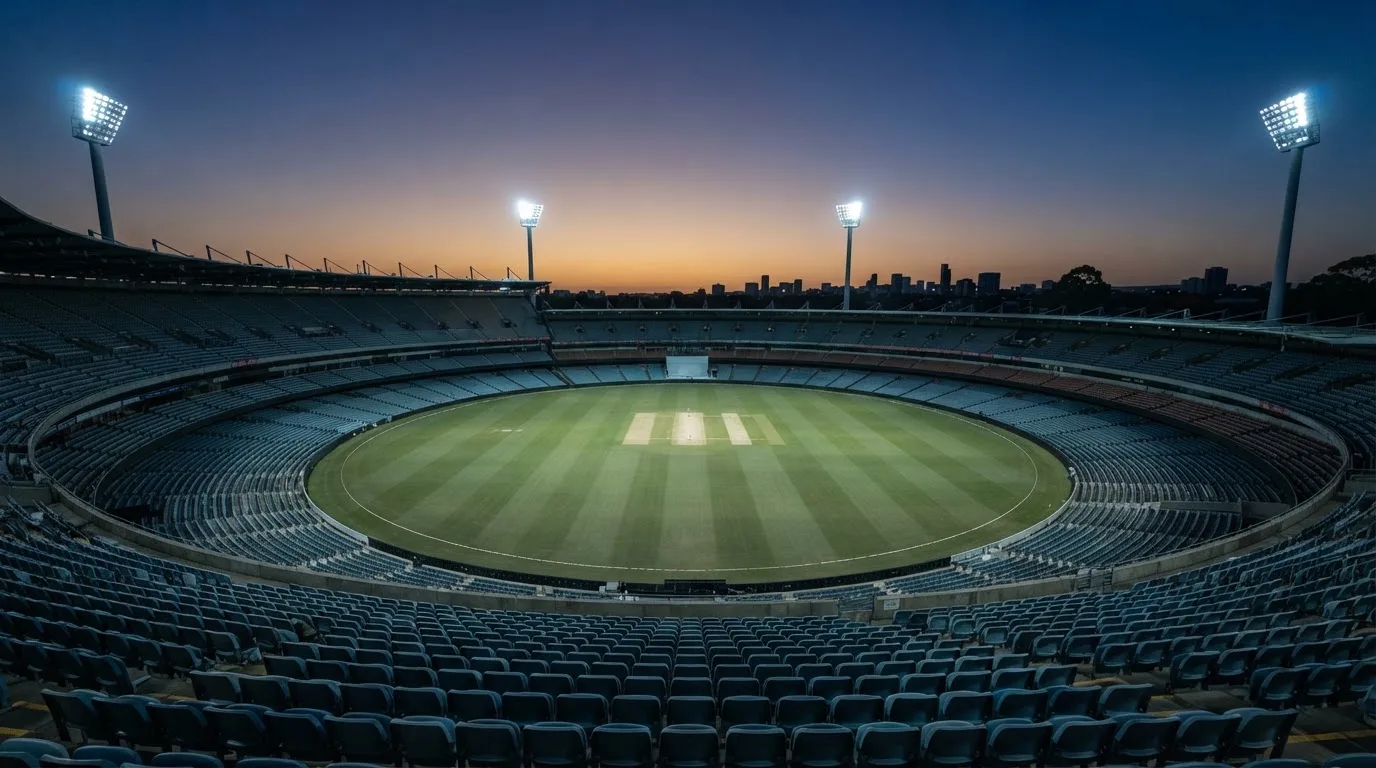
A Test match can run up to five days, with up to four innings in total, two per side. A minimum of ninety overs is scheduled per day, the oldest form of the sport, and a match neither side wins is a draw rather than a tie. The long shape means a Test price moves through long plateaus — the first session of day one, lunch, tea, stumps — and bookmakers tend to settle most markets at the close of play rather than minute by minute.
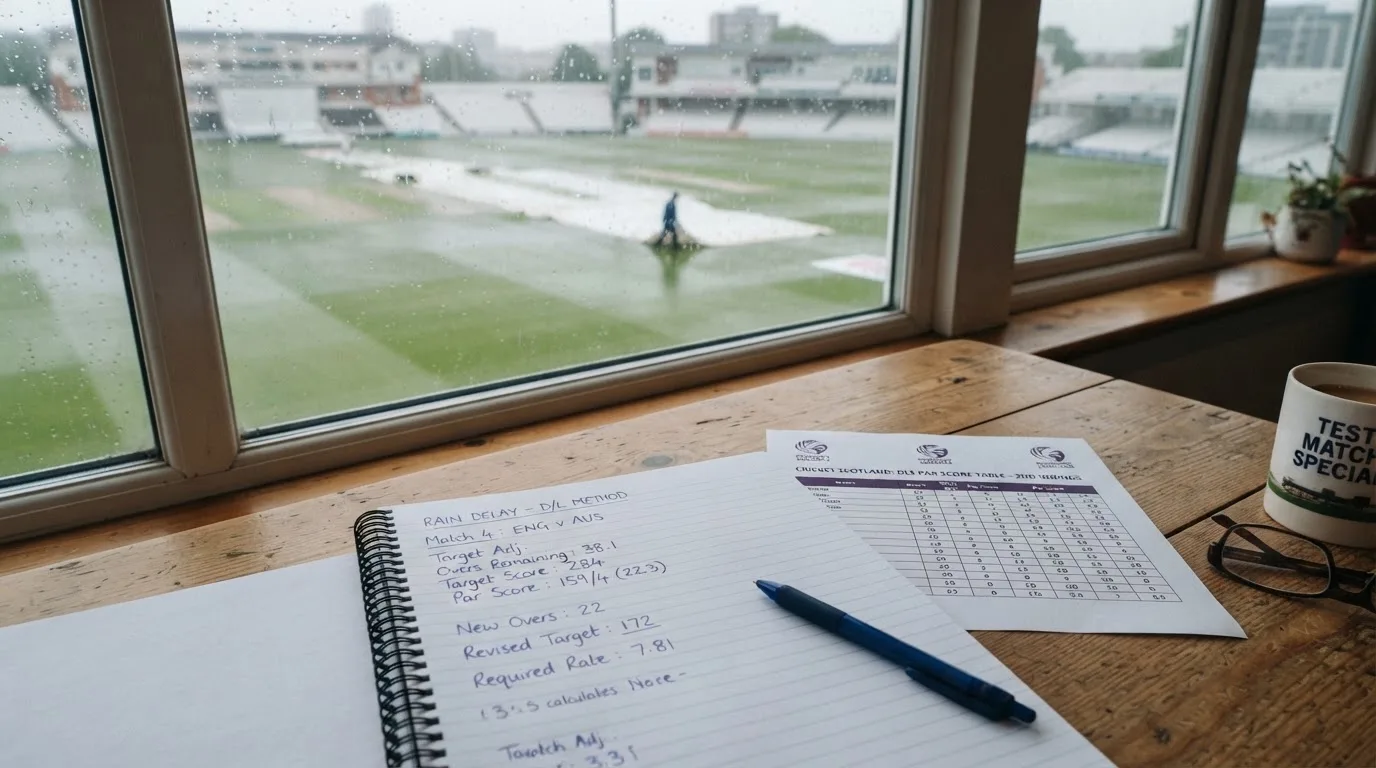
In an ODI each side bats a fixed fifty overs, even though the twenty-over powerplay and the middle-overs slowdown have reshaped run scoring across the format. A tied ODI is unusual but possible: the chasing side can be all out or run out of overs with the scores level. When rain cuts into the overs, the Duckworth-Lewis-Stern method usually sets a revised target or decides a result. If too few overs are bowled — the rule of thumb is twenty — the match is recorded as a no result and most markets are voided.
In Twenty20 each team has a maximum of twenty overs, equal to 120 legal deliveries, and a single bowler may bowl no more than four of those overs. A tied match is decided by a super over. The format is short enough that in-play prices move with almost every boundary, and the markets are denser than they are for a Test.
The International Cricket Council governs the game. Twelve full member nations hold Test status, and the World Test Championship has run since 2019. The 2026 ICC Men’s T20 World Cup was co-hosted by India and Sri Lanka across 7 February to 8 March 2026, with twenty teams and a final India won by ninety-six runs against New Zealand.
How a cricket betting price is built
Every decimal price sits over a payout share, and the gap between that share and 100 per cent is the bookmaker’s margin — the slice of every pound staked that the firm keeps on average across a market. The calculation is the same on a cricket match as anywhere else: take the reciprocal of each price, add them together across the outcomes, and divide that sum into one. What falls out is the payout share, and one minus the payout share is the margin.
Take an illustrative two-way market priced at 1.90 and 1.90 in decimals, the kind of symmetric line a bookmaker might post on a Twenty20 match winner. The reciprocal of 1.90 is roughly 0.5263, doubled across the two sides that gives 1.0526. The payout share is one divided by 1.0526, which is about 95.0 per cent, and the margin is roughly 5.0 per cent of turnover. That is the order of margin a single, well-set cricket match winner carries on the largest licensed books; tighter markets with more liquidity can drop below three per cent, and sloppier in-play lines on a niche market can carry double that.
The arithmetic is the same on a three-way market — a Test match winner with the draw as a third outcome. With three prices summing to overround above 100 per cent, the reciprocal sum divides into one to give the share, and the gap to 100 per cent is again the margin. The reader who wants the figure from a real market on a real fixture needs only the prices the bookmaker shows and that one division. What the page shows is the shape, not a quoted price for a specific fixture, because quoted prices age faster than anything else on the slip.
Two things follow from the margin being built in. First, no price is ever fair in the sense of returning the punter’s fair share of risk — every price is a haircut. Second, the gap between two firms’ margins on the same market is usually small, but the gap between two firms’ prices at any one moment can be wider, because the margin is averaged across the book and the prices at the front of it are what the marketing leans on.
Licences, regulation and where the bookmakers stand
The legal frame for cricket betting in Great Britain in 2026 sits inside the Gambling Act 2005 and a series of amendments that reached into how remote betting is licensed. The act covers England, Scotland and Wales; Northern Ireland is outside it and runs on its own older law, so a “Great Britain licence” or a “GB-licensed” bookmaker is the right phrase. The Gambling Commission, a non-departmental public body sponsored by the Department for Culture, Media and Sport, issues the licences and keeps the public register that anyone can search by business name, trading name, domain or account number.
Since the Gambling (Licensing and Advertising) Act 2014, an operator whose remote facilities are used from Great Britain needs a Commission licence wherever the company itself is based. A Curaçao, Maltese or Gibraltar licence is not a substitute for the purposes of taking bets from British customers; the relevant licence categories on the register are remote general betting standard (real events), remote general betting standard (virtual events), remote general betting limited, remote pool betting and remote betting intermediary, the last of which covers betting exchanges. Financial spread betting is regulated separately by the Financial Conduct Authority.
Identity verification before the first deposit has been compulsory since 7 May 2019, and it applies whether the customer is using a free bet or a paid stake. There is no statutory list of permitted sports or markets, no statutory cap on stakes, and no state-set deposit or loss ceiling. Operators set their own maximum stakes and may restrict customers whose betting pattern looks unusual to them. Cricket falls under the broad category of permitted sports on every GB licence the page draws from, and the markets listed in the bet types section below are the markets each operator chooses to offer under its own licence conditions and codes of practice.
The player pays no tax on betting winnings in Great Britain; General Betting Duty is the operator’s tax on gross profits and is currently fifteen per cent. From 1 April 2027 a new remote betting rate of twenty-five per cent applies within it for remote bets not on UK horse racing, while pool betting and in-person betting stay at fifteen per cent. Until then the remote rate stays at fifteen per cent. Whether operators pass duty on through odds is not something the licence register or the firm’s own terms establish clearly enough to answer on the page.
How to check that a brand is licensed
The Commission’s public register is the whole test. Search by the trading name the punter sees on the site or app, by the domain in the address bar, or by the licence account number the firm’s own terms usually quote. A match on the register means the brand is operating under that account on the day of the search. The register also names the licence holder, which is often a different company from the trading brand: several British-facing brands run under a single licensee.
How customer protection frames the price
Every GB-licensed online operator takes part in GAMSTOP, the national multi-operator online self-exclusion scheme that has been mandatory for online operators since 31 March 2020. Self-exclusion can be set for six months, one year, five years or five years with auto-renewal; after the minimum period the exclusion stays in place for a further seven years unless the punter asks GAMSTOP to remove it. GAMSTOP covers online sites and apps; betting shops sit under a separate scheme.
A financial vulnerability check applies to licensed remote betting once a punter’s deposits minus withdrawals exceed £150 in a rolling thirty days. The check looks at public records such as bankruptcies and county court judgments; it is not an income check and not a credit reference check, and it has been in force for remote operators since 28 February 2025. Financial risk assessments, which is what the press tends to call affordability checks, were announced in a staged plan without a confirmed start date and so are not yet in force.
Deposit limits are a requirement of the Commission’s Remote Technical Standards, with first changes live since 31 October 2025 and a second phase postponed to 30 September 2026. There is no fixed state-set cap, and the limit is the punter’s own choice. Credit cards have been banned for gambling in Great Britain since 14 April 2020, including credit-card-funded payments through e-wallets; debit cards and bank-based payments are not covered by that ban.
A bookmaker licensed in Great Britain offers the customer several protections an unlicensed site does not: GAMSTOP coverage, the Commission’s complaints route, an approved dispute-resolution body, and recourse if funds are withheld. The licensed side also brings the wagering cap on bonuses, the credit-card ban and the identity verification before the first bet. The unlicensed side carries none of those protections, and the Commission’s enforcement against it runs through cease-and-desist notices, search-engine and registrar referrals, payment-provider disruption and court-order DNS blocking rather than ISP-level blocking. The honest framing of the two sides is the simple one: licensed brings the framework and the friction, unlicensed drops the framework and the friction, and a punter who values one is choosing the other.
Welcome offers, free bets and what they actually cost
The pitches that greet a new account almost all run on the same template: put down a stake on a first bet, get back something the marketing calls a free bet or a bonus. The price of accepting any of them is the wagering condition attached, and the price is paid in lost margin on the bets used to clear it.
A sports welcome offer from BoyleSports, described in its own terms, returns £20 in free bets when the customer places a £10 qualifying bet. BetMGM’s terms split four £10 free bets out of a single qualifying sports bet, two tagged for football accumulators with four or more selections and two for sports multiples with two or more, each valid for seven days with minimum odds and an opt-in required. Dabble’s headline is the same shape — stake £10, get £10 in free bets on a first deposit, with a seven-day expiry on the free bet, a minimum-odds condition applying and the stake not returned with any winnings. Octobet’s headline is a fifty per cent back as a free bet up to £50, plus a £10 casino bonus layered on. Sky Bet’s free bets expire thirty days after crediting, can be used only on single or each-way markets and not on multiples, virtuals excluded, are non-withdrawable and do not return the stake. The cap on a free bet’s stake not being returned is the rule, not the exception, and reading any welcome offer means reading whether the stake comes back.
Across the whole market, a wagering requirement sits on top of every cash bonus, and from 19 January 2026 those requirements are capped at ten times the bonus — a £10 bonus at fifty times wagering was legal before the cap and is not legal now. The cap is on cash bonuses with a wagering condition; whether it covers free bets with no wagering requirement, and any cap on the maximum money value of a bonus, are not questions the register or the terms answer clearly. Mixed-product promotions, an offer that requires gambling on two or more product types such as betting and casino, are banned outright under the same set of conditions.
The arithmetic that turns a welcome offer into a cost is straightforward. Take an offer of a £20 free bet, with the stake not returned on a win, wagered at 1.90 decimal odds with a market margin of about five per cent. The free bet’s expected value is the free-bet amount times the odds minus one, divided by the odds, all multiplied by the payout share of 95.0 per cent, which for a £20 free bet at 1.90 odds gives £20 times 0.90 divided by 1.90 times 0.95, or roughly £9.00. That is the average value the free bet is worth on the stated assumptions. Lay it on a market with a tighter margin and the figure rises; lay it on a market with a wider margin and it falls; pick shorter odds and the value of the free bet drops because the odds minus one over odds shrinks; pick longer odds and it rises. A punter who treats the free bet as a marketing bonus and not as a value calculation will under-claim it; the punter who treats it as an investment will over-claim it.
What to read before claiming
Three things sit on every cricket welcome offer and decide whether it is worth taking. The first is the qualifying bet: the minimum odds, the minimum stake, the eligible markets, and the deadline for placing the qualifying bet. The second is the free-bet credit itself: its expiry, whether it can be split into smaller stakes, the markets it can be used on, and whether the stake is returned with any win. The third is any layering on top, such as a casino bonus added to the sports offer, which converts a single-product bonus into a mixed-product promotion that is no longer permitted under the current rules if it carries a condition that ties the products together.
Cricket betting on a phone or tablet
Every brand reviewed here runs an app, and the difference between firms is not whether one exists but what is being added to it. The bet365 app, the brand’s own listing claims, is the most downloaded sports betting app in the UK and holds the official global betting partnership for the UEFA Champions League. Bet600’s app listing describes Best Odds Guaranteed on horse racing. BoyleSports, BetMGM, Octobet, Sky Bet, Dabble, Kwiff and QuinnBet all maintain their own app listings with version histories and age ratings. Kwiff’s app carries a 17+ age rating on the App Store.
Browser play is supported by every operator as well, and it is the default on devices the apps do not cover. The practical questions for cricket punters are whether in-play prices refresh quickly enough on the device, whether the cash-out button appears on the markets the punter wants, and whether the bet builder is accessible before kick-off and during the match.
In-play betting and cash out on a cricket match
In-play prices on cricket are dense because the format rewards momentum. A Twenty20 fixture can swing by ten runs in an over, and a bookmaker offering in-play on that match needs markets that move quickly and settle quickly. Test cricket’s longer shape allows markets to settle at the close of play and at fall of wickets, with fewer markets updating ball by ball. Spreadex is regulated by the FCA for spread betting and by the Gambling Commission for fixed-odds betting, and warns that spread-betting losses can exceed deposits — it is a financial product with its own margin.
Cash out is offered by most GB-licensed firms on selected markets, usually the match winner and the outright winner markets; its value is the bookmaker’s current price on the bet, less a margin the firm does not publish. The cash-out price moves with the live market, and the difference between the cash-out and the bet’s eventual settlement is one way the firm earns revenue on bets the punter decides to close early.
Bet Builder+, bet365’s combined-markets product, lets the punter build a single bet from markets inside one event, and the firm describes it as available both pre-match and in-play, alongside Super Boosts, Winnings Boosts on selected bets and daily Bet Boosts. Midnite’s site lists in-play events, an acca builder, popular accas and price boosts with maximum-stake limits.
Cricket betting tips and the cost of free predictions
The market in cricket tips is dense, and the bulk of it is paid: subscription tipsters, social-media channels, paid picks and tipster platforms all take their share of the punter’s staking bank before the first ball is bowled. Free tips exist too, but the punter acting on them needs to read them the way they read a price — as marketing — and the same skepticism applies to a tipster’s win-rate claim as applies to a bookmaker’s “best odds” line.
What a tip can do is frame a bet: the markets a punter has not considered, the conditions under which a price looks generous, the way a pitch report changes the run-scoring profile of an ODI. What a tip cannot do is shorten the odds against the punter; the margin inside every price is the same whether the punter arrived at the bet cold or following a tipster.
The punter’s bankroll is the lever on cost. A bankroll rule — staking a fixed percentage of the bank on every bet, refusing to chase losses, walking away from a session at a set loss — out-earns any tipster the bankroll otherwise ignores. The punter who treats a tip as a free pick is paying the bookmaker’s margin; the punter who treats it as one input into a staking plan is the punter who keeps the bankroll intact.
What to read before staking
The match format, the pitch, the weather and the squad announcements. A green seamer at the Oval changes a Test price; a slow turning surface in Chennai changes an ODI outright. The starting line-up matters because a rested bowler or a returned batsman is not always reflected in the price the firm posted an hour earlier, and the punter who reads the toss before placing the bet will sometimes find the firm has not yet moved.
Cricket bet types and what each one settles on
The widest market on any cricket match is the match winner, and it is the one the price-building example earlier used. Beyond it, the markets fall into a small handful of families.
Match winner markets the team that wins the match. In a Test the draw is a third outcome, and the price on the draw can sit anywhere from 2.10 in a one-sided match to 7.00 in a tight contest. In an ODI or T20 there is no draw, and the match winner is two-way. In a rain-affected ODI the Duckworth-Lewis-Stern method can settle the result without a ball being bowled to the revised target.
Toss winner, top batsman, top bowler, total runs, partnerships, fall of wickets, method of dismissal, highest opening partnership, highest individual score, man of the match, total match sixes, total match fours and most sixes are the markets that appear on the bigger fixtures, with depth increasing around World Cup, Indian Premier League and The Hundred matches. Each bookmaker chooses what to offer and what to suspend, and the suspension list — usually the market that goes dark during the live over — varies.
Best Odds Guaranteed is offered on horse racing by both Bet600 and QuinnBet, with QuinnBet’s version applying to Irish and UK horse racing from 10:00am daily on singles, multiples and system bets, with a maximum benefit of £150 per customer per race. The cricket equivalent — a price guarantee if the team’s actual line-up changes — is not a standard feature and not one the page can point to across the licensed firms.
Each-way bets split the stake in two, one on the win and one on the place, with the place terms set by the bookmaker for each event. Each-way stakes double per leg, and accumulators carry the doubling through every leg. A Patent is seven bets, a Yankee eleven, a Lucky fifteen fifteen, a Super Yankee or Canadian twenty-six, a Heinz fifty-seven and a Goliath two hundred and forty-seven — the total stake is the unit stake multiplied by the number of bets. The punter who treats an each-way accumulator as a single bet ends up paying a stake eight, eleven or fifteen times the unit, with the bonus firm’s headline doing little to flag that.
Spread betting on a cricket index — total runs, player performance, index of wickets — is offered by Spreadex among others and is regulated by the FCA for the financial product. Losses can exceed deposits, and the punter treating it as a fixed-odds product is the punter who finds out late how the lever works.
A worked payout
A £10 single at 3.50 decimal odds returns £35.00, made up of the £10 stake returned plus £25.00 of profit. A £5 each-way at the same price on a cricket top batsman market, with place terms of one-quarter the odds, splits into a £5 win and a £5 place. The win leg returns £17.50 if it lands and zero if it does not; the place leg returns £5 times the place fraction of 0.875 plus the £5 stake if the player makes the place. The total stake on the bet is £10, not £5, and the headline of “£5 each-way” hides the doubling.
Tournaments, leagues and where the markets thicken
The international men’s calendar is built around the World Test Championship, the Cricket World Cup every four years, the T20 World Cup every four years, and the Champions Trophy. The Hundred, the Indian Premier League, the Big Bash League, the Pakistan Super League, the Caribbean Premier League and South Africa’s domestic T20 competition thicken the club market, and the English county season — County Championship, Vitality Blast, One-Day Cup — thickens the domestic market for the British punter.
India’s win in the 2026 ICC Men’s T20 World Cup is the most recent winner’s name on the international page, and the next World Cup cycle brings a fresh set of outright markets. The number of outright runners on a major cricket tournament is shorter than on a football tournament, often twelve to twenty teams, and the margin on the favourite versus the field can be wide.
Market depth on a County Championship division-two fixture is sparse. A Test between India and England, or an India-Pakistan fixture in any format, is the widest market the day offers. The punter whose bankroll wants action every day of the summer is trading on the international calendar plus a domestic T20 league; the punter who bets only on major tournaments has fewer fixtures and usually tighter prices.
Comparison: ten licensed bookmakers side by side
| Operator | Gambling Commission account | Licence holder | Position on the comparison |
|---|---|---|---|
| Bet600 | 44731 | Tyche Tech Limited | Fixed-odds with BOG on UK and Irish racing from midday |
| bet365 | 55148 | Hillside (UK Sports) ENC | The widest in-play book in the set, with Bet Builder+ in-running |
| BetMGM | 39198 | LeoVegas Gaming PLC | Welcome split into four £10 free bets with selection and odds rules |
| BoyleSports | 39469 | Boylesports Enterprise | Welcome returns £20 in free bets on a £10 first stake |
| Octobet | 62545 | Octopus Game Limited | Welcome is half back as a free bet up to £50 plus a casino bonus |
| Dabble | 65677 | Dabble Sports UK Ltd | Welcome is stake £10, get £10 in free bets with the stake not returned |
| Sky Bet | 67370 | SBG Sports Limited | Free bets are non-withdrawable, single and each-way only, thirty-day life |
| Fitzwilliam Sports | 48760 | SBKI Limited | Dublin-based bookmaker with capped membership and a high-stakes welcome |
| Kwiff | 44448 | Eaton Gate Gaming Limited | App rated 17+, branded as a trademark operated by Spryme Ltd |
| QuinnBet | 61011 | QuinnBet (Gibraltar) Limited | BOG on Irish and UK racing with a £150 per-race cap |
The names on this list are licensed by the Gambling Commission for remote general betting on real events and are the names the public register returns a live licence record for in 2026. Several brands sit under one licensee: Ladbrokes and Coral run together, Paddy Power and Betfair run together, and the welcome offers quoted in the next section are described the way each brand’s own terms state them. No brand in the list is “the only” licensed brand — the register lists many more — and a place in this table is not a recommendation. Each operator’s position on the comparison rests on a single distinguishing feature; a brand with a wider distinguishing line would carry more rows, and the layout chosen here keeps the reader fast.
Bet600 — a fixed-odds bookmaker with BOG on racing
Bet600’s licence sits under Tyche Tech Limited on the Commission register, and the brand describes Best Odds Guaranteed on UK and Irish horse racing in its own terms. Where it lands on cricket is the in-play layer of a book that has historically sat closer to racing than to international cricket, and the punter who wants BOG on racing and a cricket in-play section will find both on the same app. It is a fixed-odds bookmaker that prioritises racing markets, and the cricket coverage is a secondary element for the punter.
bet365 — the widest book in the set
bet365’s licence sits under Hillside (UK Sports) ENC, and the brand’s app is described as the most downloaded sports betting app in the UK. Bet Builder+ combines markets from one event into a single bet and is available pre-match and in-play, sitting alongside Super Boosts, Winnings Boosts on selected bets and daily Bet Boosts. The cricket offering runs from the international calendar down to selected county fixtures, with cash out and in-play on the majority of the listed markets. The brand’s distinguishing feature is the depth of the in-play book and the Bet Builder+ combination. It is the firm whose price the rest of the market benchmarks itself against on a major cricket match.
BetMGM — the welcome split into four free bets
BetMGM’s licence sits under LeoVegas Gaming PLC, a multi-brand licensee that operates several sportsbooks from one account. The welcome described in the brand’s own terms is four £10 free bets — two for football accumulators of four or more selections and two for sports multiples of two or more — credited after a first deposit of £10 or more and a first sports bet within seven days, valid for seven days with minimum odds and an opt-in required. The punter should weigh the four-way welcome’s complexity against the requirement for an early expiry, as this structure is more restrictive than a standard sign-up bonus.
BoyleSports — £20 in free bets on a £10 stake
BoyleSports’ licence sits under Boylesports Enterprise, and the welcome in the brand’s own terms is £20 in free bets when the customer places a £10 bet. The Irish customer sees the same headline restated in euros — €30 in free bets for a €10 bet. Compared to firms that offer a single welcome bonus, this two-tier approach requires the punter to navigate different currency and stake rules before the credit lands.
Octobet — half back as a free bet, plus a casino bonus
Octobet’s licence sits under Octopus Game Limited, and the welcome in the brand’s own terms is fifty per cent back as a free bet up to £50, plus a £10 casino bonus for new customers. It represents a mid-market offer that bundles casino play with sports betting, a structure the punter should assess for its overall wagering cost rather than just the free-bet headline.
Dabble — stake not returned on a £10 free bet
Dabble’s licence sits under Dabble Sports UK Ltd, and the welcome is a £10 stake returning £10 in free bets on first deposit, with minimum odds applying, a seven-day expiry and the stake not returned. The brand’s distinguishing feature is the social-feed product around the betting slip, which the terms do not describe but which is part of the app’s interface. The stake-not-returned clause is the same one the wider market carries on free bets, and the headline is honest in that the punter is being told the value is in the winnings only.
Sky Bet — single and each-way free bets only
Sky Bet’s licence sits under SBG Sports Limited. The free bets the firm credits expire thirty days after crediting, can be used only on single or each-way markets and not on multiples, exclude virtuals, are non-withdrawable, and do not return the stake with winnings. The brand’s distinguishing feature is the multi-market product, with in-play, accumulators and Super 6 running alongside the cricket section, and the welcome’s restriction to singles and each-ways is the qualifier the punter reads first.
Fitzwilliam Sports — Dublin bookmaker with capped membership
Fitzwilliam Sports is described in its own terms as a Dublin bookmaker with capped membership. The licence sits under SBKI Limited on the Commission register. The welcome is a “High Stakes Welcome” subject to compliance criteria, which the punter reads as an offer gated on a deposit level or a turnover criterion the firm’s terms set per customer. The brand’s distinguishing feature is the closed-door profile, and the punter who qualifies for the membership is welcome; the punter who does not is not.
Kwiff — the surprise-stake approach
Kwiff’s licence sits under Eaton Gate Gaming Limited, and the brand describes itself as a trademark operated by Spryme Ltd. The app carries a 17+ age rating on the App Store. The brand’s distinguishing feature is its stake-mutation mechanic — selected stakes can be “supercharged” to larger amounts when a punter’s bet wins, with the surprise-stake promotion running through the app. The cricket section is a smaller piece of a bookmaker with a wider promotional layer.
QuinnBet — BOG with a £150 per-race cap
QuinnBet’s licence sits under QuinnBet (Gibraltar) Limited. The brand’s Best Odds Guaranteed applies to Irish and UK horse racing from 10:00am daily on singles, multiples and system bets, with a maximum benefit of £150 per customer per race. The brand’s distinguishing feature is the BOG with the cap clearly stated, and the punter who reads the cap before staking avoids the surprise of a smaller pay-out than the headline implied on a long-priced winner.
The cost of working through a cricket welcome offer
The arithmetic turns a welcome offer into a known cost when the punter is willing to value the free bet on the assumptions set out in the offer section. The same calculation can be done on the qualifying bet: the qualifying stake is paid at full loss to the bookmaker’s margin, and a £10 qualifying bet at odds of 1.90 with a five per cent market margin costs the punter about fifty pence on average. That is a smaller sum than the cost of a high-wagering bonus, but it is a cost, and the welcome offer’s headline is the gain against which the cost is set.
Where the bonus is the headline — a cash bonus with a ten times wagering cap, the maximum the current rules allow — the punter faces a turnover requirement at the maximum level and a clearing cost that depends on the markets they use to clear. At a five per cent market margin, a £100 turnover costs the punster £5 of expected value, and a £10 qualifying bet plus a £10 free bet costs the punter about £5.50 to £9.00 depending on how the free bet is used. The headline of “free £10” is the figure, the cost is the figure against it, and the punter deciding to claim is deciding that the gain outweighs the cost on the markets they actually bet on.
The cricket calendar and the markets that move with it
The international calendar and the domestic leagues sit alongside each other through the British summer, with the Hundred and the Vitality Blast overlapping with the Test matches and the white-ball internationals. Outside the summer, the Big Bash, the Pakistan Super League and the Caribbean Premier League run the southern hemisphere’s summers, and the IPL runs its window in the spring. The markets move with the calendar: outright markets thicken in the run-up to a major tournament, in-play coverage of the Test matches between India and England is the deepest of any international fixture, and a domestic T20 qualifier is a thin market with a wider margin.
A bettor’s choice of fixtures is a choice of margin. The major tournament’s outright market carries a margin closer to the firm-wide average; an obscure bilateral carries a margin the firm has set with less competition in mind. The bookmaker the punter bets with is partly a function of which fixture they bet on, because every firm’s in-play team prices its international cricket differently from its club cricket.
Frequently asked questions
How does cricket betting work?
A cricket bet is a stake against a price the bookmaker quotes on a market — the match winner, the top batsman, the total runs, the fall of the next wicket, the outright tournament winner. If the selection wins, the stake is paid back plus winnings calculated from the decimal price. If the selection loses, the stake is lost. The price carries the bookmaker’s margin inside it, so the punter’s expected return across many bets is below the stake they put down.
How do you bet on cricket?
The mechanical steps are the same on every GB-licensed sportsbook: register an account with name, address and date of birth; pass the identity verification the bookmaker runs against the betting register; deposit using a debit card, bank transfer or e-wallet that is not credit-card-funded; pick the match and the market; enter the stake; confirm. The bet appears on the betting slip with the decimal price the firm is offering at the moment the bet is placed, and any movement before the bet is confirmed does not change the price the punter takes.
Can a cricket betting system guarantee a win?
No system can guarantee a win, because the price the bookmaker offers carries a margin the punter cannot arbitrage across firms quickly enough to remove. A staking plan, a bankroll rule and a fixture-selection discipline are the levers on the punter’s cost of betting, but they are not a way to overturn the margin on every bet. Anyone selling a system that promises to overturn it is selling marketing.
How do you check that a bookmaker holds a Gambling Commission licence?
Open the Commission’s public register, search by the trading name on the site or app, by the domain in the address bar, or by the licence account number the firm’s own terms usually quote. A match on the register returns the licence holder, the licence category and the licence status; a no-match is a no-match. The register is the whole test, and the punter who trusts a licence claim made on the operator’s own site without checking the register is trusting the operator to police itself.
How is the return on a bet worked out from the stake and the odds?
For decimal odds, the return on a winning single is the stake multiplied by the odds. A £10 stake at 3.50 returns £35, made up of the £10 stake and £25 of profit. A combination bet multiplies the odds of the legs into one price, and the return is the stake multiplied by the combined odds; an accumulator is a combination bet. A free bet whose stake is not returned pays only the profit, which is the stake multiplied by the odds minus one.
What is the bookmaker’s margin and how can it be seen in the odds?
The margin is the slice of every unit staked that the bookmaker keeps on average across a market. Take each decimal price, take its reciprocal, add the reciprocals together across the market’s outcomes, and divide one by the sum. What falls out is the payout share, and one minus the payout share is the margin. A two-way market at 1.90 on each side carries roughly a 5.0 per cent margin; a tighter market with more liquidity can drop below 3 per cent, and a sloppy in-play line on a thin market can carry double. The margin sits inside every price the punter sees, and the gap between two firms’ margins on the same market is the gap the punter is comparing.
Rugby, cricket & Gaelic – Lowdepositbetting.com
Content created by the «Lowdepositbetting.com» team
