
Football betting tips 2026 — what a tip actually costs the punter
 Available in US
Every punter chasing a winning slip wants the same thing — a price that pays more than the chance is worth. Getting there is harder than the tipsters make it sound, and most of what is sold as a “tip” is closer to a guess with a marketing wrapper. This guide explains how a football betting tip is built from form, fixtures and the bookmaker’s own odds, what the bookmaker’s margin takes off before a ball is kicked, and what a free bet, a price boost or a welcome bonus really cost once the small print lands. The point is not to hand over picks. It is to give a reader the working parts so the next tip — whoever supplies it — can be read for what it is worth.

The information below is current as of October 30, 2026 and the licence numbers quoted are verified against the Gambling Commission’s public register.
The fundamentals of a football betting tip
Association football has its laws written and maintained by the International Football Association Board, which has done that work since 1886. A standard adult match runs two halves of 45 minutes each, with stoppage time at the referee’s discretion. A tied game in a knockout competition may go to two further 15-minute periods of extra time, and some competitions then settle the tie by a penalty shoot-out. Each side fields a maximum of eleven players on the pitch including the goalkeeper, and the goal frame stands 7.32 m wide by 2.44 m high. None of that changes because somebody is betting on it, but every one of those rules shapes a market — 90 minutes plus stoppage is the line most 1X2 prices settle on, extra time is usually treated separately for knockout ties, and the size of the squad available on the day determines whether a goalscorer market is plausible at all.
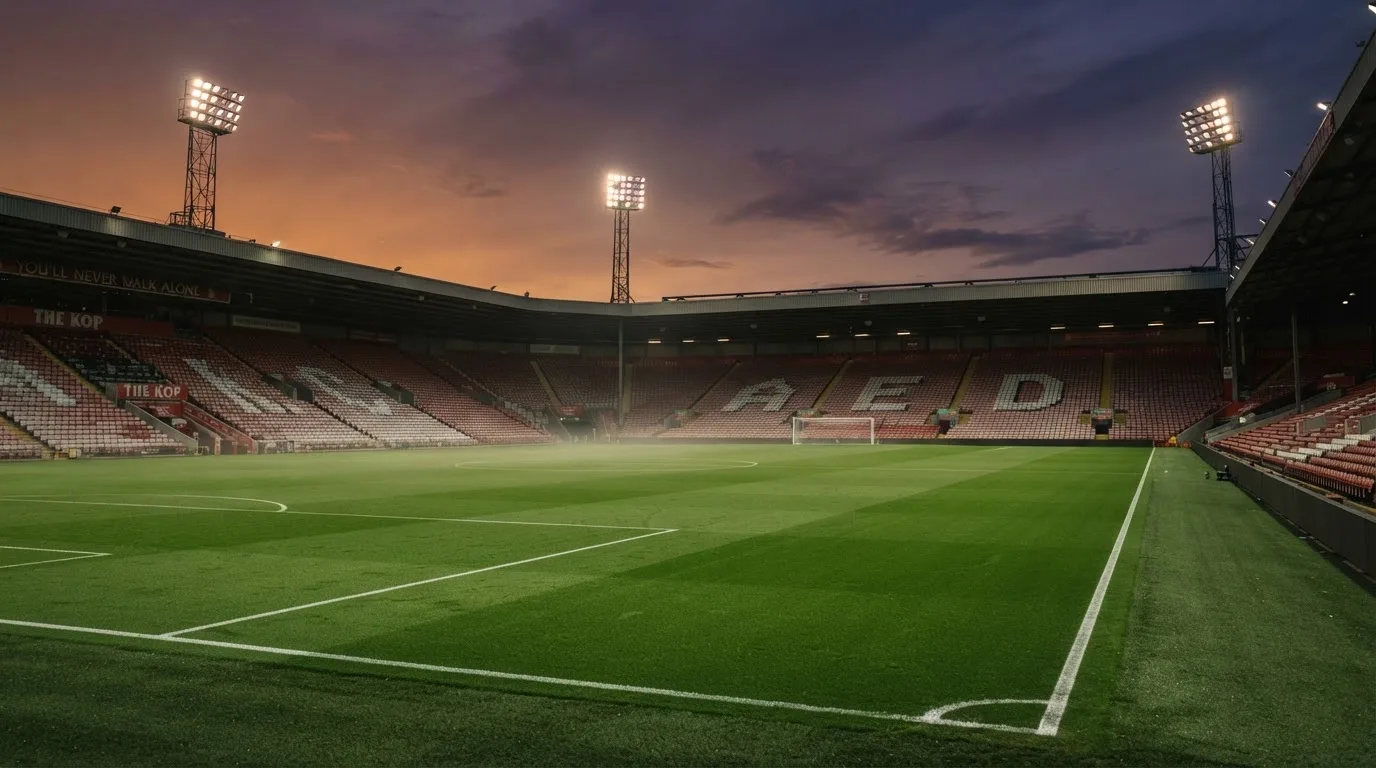
A tip is the name the betting world gives to a prediction: which side wins, both teams to score, over a certain number of goals, a player to find the net, an Asian handicap line. Behind the tip sit four working parts — recent form, the team’s underlying statistics, the named starting eleven, and the bookmaker’s own price. Form is the recent run of results. Underlying statistics strip out the luck: expected goals, shots on target, the share of possession that turned into chances. The starting eleven matters because a side resting three frontline players for a cup tie is a different proposition from the same side at full strength. The bookmaker’s price is the final filter: a tip is only useful when the price on offer is bigger than the chance the tipster’s research says the outcome has.
How a tip becomes a value bet
A value bet is the one phrase that does the work of every other in this corner of the market. It means the price on offer is higher than the true probability of the outcome, once the bookmaker’s built-in margin is taken out. A side that should be evens but is priced at 6/4 is value. A side that should be a strong favourite but is priced only at 4/5 is not — the price is too short for the chance. The tipster’s job is to find the prices where the bookmaker has got it wrong; the punter’s job is to back only those, and to leave the rest alone.
The hard part is that no tip is ever certain. A value bet can lose. A heavy favourite can lose. A confident tip based on form and injuries can lose because a centre-back slips at the wrong moment. The price is a long-run expectation, not a single-match guarantee, and the only honest framing of a tip is that it is a wager the tipster believes offers more than it should, not a forecast the tipster believes will land.
Staking and bankroll discipline
A bankroll is the money set aside for betting, kept separate from rent, bills and the rest of life. Staking is the rule that decides how much of that bankroll goes on each bet. Flat staking — the same unit, say 2% of the bankroll, on every selection — survives losing runs because the bankroll does too. Variable staking, where the bet grows with confidence or shrinks after a loss, looks clever and usually isn’t, because the punter’s confidence is not a reliable measure of anything except the punter’s mood. The discipline worth keeping is small, repeated bets on a shortlist of value prices, not a large bet on a single confident pick.
The statute book: who is allowed to take your bet
Football betting in Great Britain sits inside the Gambling Act 2005, enforced by the Gambling Commission, a non-departmental public body sponsored by the Department for Culture, Media and Sport. The Commission’s own public register is the test of whether a brand holds a licence — every operator serving customers in Great Britain needs a Commission licence, since the Gambling (Licensing and Advertising) Act 2014 brought the point of consumption inside the Act, whatever the operator’s home jurisdiction. A Malta, Gibraltar or Curaçao licence is not a substitute; sections 33 and 36 of the 2005 Act, as amended, require the British one on top.

Betting and casino are separate permits with separate rules. A casino licence does not authorise sports betting, and a sports betting licence does not authorise slots or table games. Several brands can run under one licensee, so Ladbrokes and Coral, or Paddy Power and Betfair, are not two independent operations — they are two trading names of the same group.
Minimum age is 18, and the operator verifies name, address and date of birth before a customer can deposit or gamble — that has been the case since 7 May 2019, and it covers free bets and bonuses as well as cash stakes. There is no anonymous play at a licensed site. Northern Ireland sits outside the Gambling Act 2005 and runs on its own older law, so a Great Britain licence does not regulate Northern Ireland.
What the licence categories mean
The Commission’s remote licences split into five shapes: remote general betting standard (real events), remote general betting standard (virtual events), remote general betting limited, remote pool betting, and remote betting intermediary, the last one being the exchange licence. Every operator reviewed later in this guide holds a real-events general betting licence. A spread-betting operation that touches financial instruments is regulated by the Financial Conduct Authority instead — Spreadex, for instance, runs two licences at once: FCA for financial spread betting, Gambling Commission for fixed-odds — and spread betting losses can exceed the original deposit. That is a real and material point for anyone considering a sports spread bet over a fixed-odds wager.
Offshore brands and what is lost without a licence
The Gambling Act makes it an offence, aimed at the operator, to provide gambling facilities in Great Britain without the licence the Act requires: up to 51 weeks’ imprisonment, a fine up to level 5, or both on summary conviction, six months in Scotland. No offence aimed at a customer who merely bets with an unlicensed site was found. The cost sits elsewhere — no British consumer redress if funds are withheld, no approved dispute-resolution route, no GAMSTOP coverage, no Commission complaints channel, no obligation on the operator to honour the 10x bonus wagering cap or the £150 vulnerability check. Honest framing: a licensed site verifies identity before the first bet and runs affordability controls; an unlicensed site runs on the operator’s own rules. The reader’s job is to know which one is on the other side of the bet slip.
Responsible gambling: the controls a licensed site must run
The safer-gambling regime that sits behind a Great Britain licence is the practical answer to the question every punter should ask: what stops this from getting out of hand. The components are mandatory, not optional, and the licensed brands reviewed later in this guide run them.
GAMSTOP is the national multi-operator online self-exclusion scheme, a mandatory licence condition for every online operator since 31 March 2020. The exclusion periods are six months, one year, five years, or five years with auto-renewal, and after the minimum period the exclusion stays in place for a further seven years unless the customer asks GAMSTOP to remove it. GAMSTOP covers online sites and apps; betting shops run a separate service.
Deposit limits are an obligation under the Commission’s Remote Technical Standards. Operators must offer a gross deposit limit on a fixed time frame, and the first changes have applied since 31 October 2025, with a second phase postponed to 30 September 2026. There is no state-set deposit ceiling — limits are the customer’s choice.
A financial vulnerability check has applied to licensed remote betting since 30 August 2024, and a financial risk assessment — what the press calls an “affordability check” — has been announced in a staged plan. The trigger for a vulnerability check is when a customer’s deposits minus withdrawals exceed £150 in a rolling 30 days, in force since 28 February 2025. It is a public-record check — bankruptcy, county court judgments — not an income check and not a credit reference check. Whether a risk-assessment trigger is live is not established: the Commission’s article of 7 July 2026 describes the plan, with no start date.
Help is reachable through GamCare and its National Gambling Helpline, GambleAware, the NHS gambling clinics network, and Gamblers Anonymous. Unibet’s safer-gambling area shows the standard set: deposit limits, a Player Profile test, product restrictions, self-exclusion, with live chat support and links to BeGambleAware, GamCare, GAMSTOP, Gambling Therapy and the Betting and Gaming Council. That is what the licensed end of the market looks like under the bonnet.
Crypto and anonymity at licensed football betting sites
Crypto deposits at licensed UK bookmakers are the smaller corner of the market that the marketing tends to talk up. The reader-side point is straightforward: identity is verified before the first deposit at any licensed site, so there is no anonymous play. The funding rail — debit card, bank transfer, an e-wallet — is verified; the question of which token the punter uses to fund the rail is downstream of that. A licensed operator that accepts a cryptocurrency deposit still runs the same identity checks, the same GAMSTOP coverage and the same vulnerability triggers. The token on the way in changes nothing about the protections on the way out.
A reader attracted to crypto on the grounds of pseudonymity should weigh what they actually want. The ledger is public, the exchange on-ramp is a regulated financial-services business with its own KYC, and the receiving bookmaker is itself a Commission-licensed operator running the full verification suite. The anonymity claim does not survive the regulated end of the journey.
An offshore operator that markets itself as a “crypto football betting site” without a Great Britain licence is a different case. The verification is the operator’s choice, the dispute resolution is the operator’s choice, and the funds held by the operator are not protected by any British route. The bonus cap and the vulnerability check are not in force. The gamble is on whether the operator will pay out, and whether the customer can reach the funds if it does not. That trade is the reader’s to make, not this page’s to recommend.
Bonuses and free bets: what the marketing word costs the punter
The phrase “free bet” is the smallest, most profitable word in British sports betting marketing. A free bet is a token the operator credits to an account after a qualifying condition is met, and the stake is usually not paid back when the bet wins. A £10 free bet on a winner at 3/1 returns £40 of profit, not £50; the £10 stake is gone. That is the defining feature of the offer and the one the marketing does not lead with.
The welcome package most punters meet first is Betway’s: £40 in free bet tokens (4 x £10) credited on settlement of a first bet of at least £10 at minimum odds of 2.0, with a 7-day expiry and debit card deposits only. The token is a free bet, the stake is forfeit, and the qualifying condition — minimum odds 2.0, stake at least £10, debit card only, seven days to use — is the small print that turns the headline into a price.
What the wagering cap actually does
Since 19 January 2026 a Commission promotion rule has capped wagering requirements on bonuses at 10x the bonus. A £10 bonus at 50x wagering, the kind of figure some offers used to carry, would have needed £500 of qualifying bets. Under the cap no offer requires more than £100 of qualifying bets on a £10 bonus. Mixed-product promotions — “bet on football to unlock free spins”, a sportsbook offer that demands casino play to clear — are banned. That is a meaningful consumer protection, and it changes what counts as a fair welcome.
Whether the cap applies to free bets that carry no wagering condition, and any cap on the money value of a bonus, are not established. Free bets are typically not subject to wagering, because the stake is forfeit; the cap talks to the bonus-with-wagering shape of the market, not the credit-token shape.
The arithmetic of clearing a bonus
The turnover needed to clear a bonus is the bonus base — the bonus itself, or the bonus plus the deposit — multiplied by the wagering factor. A £10 bonus at 10x wagering needs £100 of qualifying bets. A £100 deposit matched 100% with a 10x bonus-plus-deposit turnover needs £2,000 of qualifying bets. The number of bets is the turnover divided by the stake on each. The cost of clearing it, on average, is the turnover multiplied by the margin of the market the qualifying bets are placed on: turnover times margin is the expected loss on the clearing bets.
For a punt on a market with a 5% margin, £100 of qualifying turnover costs about £5 of expected loss. The bonus is worth £10 gross; net of clearing, the punter keeps roughly £5. For £2,000 of turnover on the same market, the expected loss is £100 — close to the value of the bonus before any other conditions. The reader’s working assumption is that a bonus with high wagering costs roughly its own value in expected loss, and the net value of an offer is the bonus minus the clearing cost, not the bonus alone.
Sporting Index’s new-customer shape
A useful worked example sits at Sporting Index. A £10 fixed-odds bet at minimum odds of 1/2 unlocks three £10 fixed-odds free bets, three £5 Total Goals spread bets, three £5 Winning Favourites spread bets, and a £1 Race Index spread bet; the qualifying bet cannot be placed in play or cashed out early. The shape is mixed — fixed-odds and spread — and the spread-bet leg can cost more than the stake because spread betting losses can exceed the deposit. The reader’s task is to read each component separately, because the “free” in “free bets” applies inside each component’s own rules.
Mobile and app: where the slip is actually built
Most bets are no longer placed at a counter. They are placed on a handset or a tablet, through an app or a mobile site, in the minutes before kick-off. The British bookmakers run the same way the rest of the market does: an iOS app, an Android app, and a mobile-responsive website for those who do not install either. The difference between brands is depth, not shape.
The market-leading apps combine a deep football coupon — Premier League, Champions League, the European leagues, the international fixtures — with live in-play, cash out, bet builder, price boosts and a one-click bet slip. 10bet’s sportsbook covers football, tennis and horse racing, with cash out, bet builder and live streaming on the app. LiveScore Bet’s app and site take debit cards (Visa and Mastercard), Apple Pay, PayPal, Pay by Bank (Open Banking) and Revolut Pay — a payment set that covers most British bank customers without a third-party wallet. London Bet’s app combines sports betting (football, tennis, horse racing, greyhounds, darts, golf, cricket, NFL, NBA, MLB, snooker) with Pragmatic Play casino slots and live in-play betting, all under a 17+ App Store age rating and published by Thistle Bet Limited.
The punters who bet most heavily tend to use three or four apps rather than one, because each operator carries different prices and different promotions. Comparing a price across apps before placing the bet is the simplest piece of discipline in the market, and the app is the tool that makes it possible.
Live betting and cash out: the in-play product
In-play football betting is the largest single product inside the British online market. The slip is filled before kick-off or after, the price moves with the match, and the operator offers a cash-out button at any point where the bet is in profit. GB bookmakers offer it, the controls are the operator’s licence conditions and customer-protection duties, and no statutory cap on in-play stake or frequency was found.
The price on an in-play market is not the price on the pre-match market. A side that was 2/1 before kick-off and goes a goal up inside ten minutes is shorter — the price has moved with the chance. The cash-out value offered by the operator reflects the operator’s own in-play margin, which is usually wider than the pre-match margin because the model is less certain. Cash out is a convenience product with a price, and the price sits inside the offer.
Bet builder and same-game multi are the closely related products that let the punter combine several selections from one match — result, both teams to score, total goals, a player to score — into one slip with multiplied odds. Midnite’s site shows acca builder, popular accas and price boosts, each with maximum-stake limits printed beside the boosted price. Kwiff’s Supercharge feature can instantly boost the odds on a single bet or a multi from 2/1 to as long as 20/1, on any sport. The boosted price is the marketing; the maximum stake and the cap on the boosted winnings are the working parts.
Predictions and strategy: building a tip that earns its place
A prediction worth acting on is built from three working parts and a fourth that decides whether to act at all. Form, fixtures and the named eleven are the parts. The bookmaker’s price is the gate.
Form is the recent run of results, weighted by the quality of the opposition — a side that has taken four points from Manchester City and Liverpool is in different form from a side that has taken four points from the bottom three. Underlying statistics strip out the luck: expected goals, big chances, the share of possession that turned into efforts on goal. A side that has won three on the bounce without the xG to justify it is due a correction; a side that has lost three on the bounce while outscoring its opponents on xG is due the other way. The starting eleven, confirmed near kick-off, is the final check — a side missing its first-choice centre-back and creator is a different proposition from the same side at full strength.
The price is the filter. A tip on the home side at 4/5 is not a value bet if the model says the home side is closer to 4/6. A tip on the draw at 3/1 is not a value bet if the model says the draw is closer to 5/2. The punter’s job is to keep a private model, however rough, and to back only the prices where the model’s probability beats the price. Without the gate, the form and the stats are decoration.
Why no tip is ever certain
A value bet is a long-run expectation, not a single-match guarantee. A heavy favourite loses. A confident tip based on form and injuries loses because a defender slips or the post is hit twice in a minute. The price is the average outcome over many bets; any single bet is a draw from a distribution that includes the loss. Betting is not an income and the diversifier who treats it as one is the diversifier who leaves the market. The framing on every tip worth reading is “this is a price I think is too big”, not “this is a result I think will happen”.
Bet types and odds: the shape of the slip
Football betting odds come in two formats in Great Britain. Fractional odds — 5/1, 11/4, evens — are the older form; odds-on is shorter than evens, odds-against is longer. Decimal odds — 6.00, 3.75, 2.00 — are the European form, increasingly common online. The conversion is straightforward: a/b in fractional is (a ÷ b) + 1 in decimal. 5/1 is 6.00, 11/4 is 3.75, evens is 2.00. The return on a winning bet is stake multiplied by decimal odds; the profit is stake multiplied by decimal odds minus the stake, the same as stake × (decimal odds − 1), or stake × a ÷ b for fractional.
A single is one selection. A double is two. A treble is three. An accumulator — “acca” — is four or more. The odds of the legs multiply into one price: a four-fold at 2/1, 3/1, 5/2 and 6/4 multiplies into a single price of around 75/1. The each-way bet is two bets of equal stakes — the win part and the place part — so the stake doubles; place terms vary by race and operator, and the place part pays a fraction of the win odds. The full multiple-bet shapes — Trixie (4 bets), Patent (7), Yankee (11), Lucky 15, Super Yankee or Canadian (26), Heinz (57), Goliath (247) — multiply the unit stake by the number of bets, so a £1 Trixie costs £4 and a £1 Goliath costs £247.
Handicap football betting is the form that lets a punter back a heavy favourite at a usable price or a heavy outsider with a head start. A -1.5 handicap on the home side means the bet pays only if the home side wins by two or more; the price is correspondingly longer. Asian handicap is a finer-grained variant that handles the half-goal line by splitting the stake across the nearest whole lines. Over/unders — the total-goals market — is settled on the number of goals in the match, usually 0.5, 1.5, 2.5, 3.5 or 4.5; both teams to score (BTTS) is settled on whether each side finds the net at least once. Bet builder and same-game multi combine several selections from one match into one slip with multiplied odds.
The bookmaker’s margin and how to see it
The margin — sometimes the overround — is the cut the bookmaker keeps from every market. On a two-way market with decimal odds of 1.90 / 1.90, the payout share is 1 ÷ (1 ÷ 1.90 + 1 ÷ 1.90), which is 1 ÷ (0.5263 + 0.5263) = 0.95. The margin is 1 − 0.95, which is 0.05, or 5%. The bookmaker keeps 5% of every unit bet on that market; the punter gets back 95% in the long run on a true-fair-price book. A 1.85 / 1.85 line widens the margin to about 8.1%; a 1.95 / 1.95 line tightens it to about 2.6%. The price the punter sees is the price after the margin.
A practical exercise on an illustrative Premier League match priced at 1.90 / 3.40 / 4.50 shows the same shape on a three-way market: 1 ÷ (1 ÷ 1.90 + 1 ÷ 3.40 + 1 ÷ 4.50) = 1 ÷ (0.5263 + 0.2941 + 0.2222) = 1 ÷ 1.0426 = 0.959, so the margin is about 4.1%. The exact figure varies by event, by market and by bookmaker; the band is roughly 2% to 10% for mainstream football 1X2, and wider on the more obscure markets. The reader’s working habit is to compare margins across operators before staking — the same fixture at 4.1% margin versus 6.5% margin is the same fixture at a different long-run cost.
This is the information-gain section of the guide: the margin is the single number that tells the punter what the market is really costing them, and the price the bookmaker advertises is the price after the margin is taken out. A punter who never sees the margin is a punter who never sees the price.
Sports and tournaments: the calendar that drives the slip
The football calendar shapes which markets are live in any given month. The 2026–27 Premier League runs from 21 August 2026 to 30 May 2027 with 20 teams, the promoted clubs Coventry City, Ipswich Town and Hull City, and Arsenal as defending champions. The season’s first half runs from August to December, with the congested festive programme in late December and early January, and the run-in from April to May. The FA Cup and the EFL Cup sit alongside, with the Champions League and the Europa League running concurrently for the English clubs in European competition.
The 2026 FIFA World Cup is the international centrepiece that just past — Spain beat Argentina 1–0 after extra time to win the final on 19 July 2026. The next senior men’s international tournament is the run-up to UEFA Euro 2028, hosted across the United Kingdom and Ireland, with the qualifying cycle starting in 2026. The women’s international calendar runs concurrently, with the UEFA Women’s Euro 2025 just past and the FIFA Women’s World Cup 2027 on the near horizon. The reader’s working assumption is that the international windows — March, June, September, October, November — shift the betting volume away from the domestic leagues and onto the internationals for two weeks at a time.
The lower leagues, the Scottish Premiership, the Welsh leagues, the Northern Irish league and the Republic of Ireland’s league run alongside, with the English Football League and the National League filling out the English pyramid below the Premier League. Each carries its own coverage depth at each operator; the bigger books price the Premier League and the Champions League most aggressively, the Championship and League One less so, and the lower leagues thinner still.
The top 10: how the licensed UK bookmakers compare
The ten operators below all hold a Gambling Commission remote licence for real-events general betting, and all sit on the Commission’s public register. Each review covers what the operator runs, how it differs from the others on this list, and where it sits on the price-and-product trade. The comparison table beneath the reviews brings the licence and the headline offer shape together for quick reference.
Betway
Betway holds Gambling Commission remote licence 039372-R-319367-029 (Commission account 39372), in the remote general betting standard (real events) category. The welcome offer for new UK and Ireland customers is £40 in free bet tokens (4 x £10) credited on settlement of a first bet of at least £10 at minimum odds of 2.0, with a 7-day expiry and debit card deposits only. The shape is straightforward — qualify with one bet at minimum odds 2.0, take four £10 tokens, use them inside a week — and the token is a free bet whose stake is forfeit. Betway’s product set is the full one: deep football coverage, in-play, bet builder, cash out, and an established app on both stores. Betway is a strong recommendation for a punter who values brand familiarity and a straightforward welcome bonus over a wide array of niche payment methods.
BetUK
BetUK holds Gambling Commission remote licence 039198-R-319450-029 (Commission account 39198), with LeoVegas Gaming PLC as the licence holder. The free-bet product excludes virtual sports, esports and non-UK/IE horse racing, with minimum odds applying. The brand runs on the LeoVegas platform and carries the casino-style bonus mechanics that come with it — product restrictions, free-spin offers, the cross-sell between sportsbook and casino — inside the Commission’s bonus cap. The shape is a free-bet-heavy welcome with the typical product exclusions, and the operator suits a punter comfortable on the LeoVegas-style mobile product who plays casino as well as sports.
10bet
10bet holds Gambling Commission remote licence 043173-R-322899-023 (Commission account 43173), with Blue Star Planet Limited as the licence holder. The sportsbook covers football, tennis and horse racing, with cash out, bet builder and live streaming. The product set is full and the app carries the same suite. 10bet suits a punter who wants the in-play and streaming combination on football and is happy to leave the depth of horse racing to a specialist. The welcome shape is a free-bet offer rather than a matched deposit, which keeps the wagering exposure low.
LiveScore Bet
LiveScore Bet holds Gambling Commission remote licence 056859-R-332720-005 (Commission account 56859), with LiveScore Betting and Gaming (Gibraltar) Limited as the licence holder. The payment set is the broadest on this list: debit cards (Visa and Mastercard), Apple Pay, PayPal, Pay by Bank (Open Banking) and Revolut Pay. The brand runs alongside the LiveScore scores-and-fixtures product, which means the app carries live data and live in-play pricing on the same screen. The shape suits a punter who already uses the LiveScore app for scores and wants the bet slip built into the same view, and the payment set covers most British bank customers without a third-party wallet.
London Bet
London Bet holds Gambling Commission remote licence 066162-R-340278-004 (Commission account 66162), with Thistle Bet Limited as the licence holder. The app combines sports betting — football, tennis, horse racing, greyhounds, darts, golf, cricket, NFL, NBA, MLB, snooker — with Pragmatic Play casino slots and live in-play betting. The brand sits under a 17+ App Store age rating and the suite is broad: most British sports, a casino tab, and the live in-play product on football. London Bet is a convenient choice for a punter looking to mix sports and casino in one place, though it offers slightly less depth on the lower leagues than some of the established giants.
Kwiff
Kwiff holds Gambling Commission remote licence 044448-R-323408-017 (Commission account 44448), with Eaton Gate Gaming Limited as the licence holder. The defining product is the Supercharge feature, which can instantly boost the odds on a bet — for example from 2/1 to 20/1 — on singles or multis, on any sport. The maximum stake on a boosted bet is capped, and the maximum boosted winnings are usually capped too. The brand suits a punter who likes the surprise of an unexpected price boost and is happy to bet inside the cap on the boosted lines. The non-boosted prices are competitive, the boosted prices are the marketing.
William Hill
William Hill holds Gambling Commission remote licence 039225-R-319373-015 (Commission account 39225), with WHG (International) Limited as the licence holder. The Best Odds Guaranteed promotion pays the higher of the taken price and the starting price on UK and Irish horse racing from 8 AM on the day of the race, on both single and multiple bets; it does not apply to ante-post, tote or pari-mutuel bets. The football product is deep, the app is established, and the brand sits on the British high street as well as online. William Hill suits a punter who wants a long-established operator with a deep horse-racing product and a familiar football coupon.
Kalooki Sportsbook
Kalooki Sportsbook holds Gambling Commission remote licence 057730-R-333396-005 (Commission account 57730), with Kalooki Sportsbook Limited as the licence holder. The brand advertises instant withdrawals by bank transfer within minutes, Best Odds Guaranteed on UK and Irish horse racing, in-play betting, daily boosts and extra place races. The verification is the standard GAMSTOP-aware one, and the operator is a member of GAMSTOP. Kalooki is the newer British-facing brand on this list and the instant-withdrawal claim is the marketing differentiator; the punter’s job is to test the claim on a small withdrawal before relying on it.
Sporting Index
Sporting Index holds Gambling Commission remote licence 027343-R-308898-011 (Commission account 27343), with Sporting Index Limited as the licence holder. The new-customer offer is a mixed shape: a £10 fixed-odds bet at minimum odds of 1/2 unlocks three £10 fixed-odds free bets, three £5 Total Goals spread bets, three £5 Winning Favourites spread bets and a £1 Race Index spread bet, with the qualifying bet unable to be placed in play or cashed out early. The fixed-odds leg is a normal free-bet shape; the spread-bet leg is the differentiator and the cost — spread betting losses can exceed the deposit, and the £5 Total Goals spread can lose more than £5 if the line is breached. Sporting Index suits a punter who already understands spread betting and wants both fixed-odds and spread markets under one licence.
Tote
Tote holds Gambling Commission remote licence 054779-R-331321-008 (Commission account 54779), with TDCO Limited as the licence holder. The product is pool betting — the bettor goes into a pool with other punters, the pool is divided after the deduction of the operator’s take, and the dividend depends on the pool size and the number of winners. The Tote’s pricing structure is different from a fixed-odds book: there is no fixed price, the dividend is announced after the race, and the Best Odds Guaranteed promotion is the standard for UK and Irish racing on the day. The Tote is a destination for the racing specialist who prefers the pool-betting model, accepting that dividend payouts mean the final price is only known after the event.
Operator comparison at a glance
The table below brings the licence holder and the headline offer shape together for the ten brands reviewed above. The licence numbers are the Gambling Commission account numbers and can be checked on the Commission’s public register.
| Brand | Licence holder (Commission account) | Offer shape on the operator’s own terms |
|---|---|---|
| Betway | Betway Limited (39372) | £40 in free bet tokens (4 x £10) after a £10+ first bet at minimum odds 2.0; 7-day expiry; debit card deposits only |
| BetUK | LeoVegas Gaming PLC (39198) | Free-bet welcome; minimum odds apply; excludes virtual sports, esports and non-UK/IE racing |
| 10bet | Blue Star Planet Limited (43173) | Free-bet welcome; cash out, bet builder and live streaming on football |
| LiveScore Bet | LiveScore Betting and Gaming (Gibraltar) Limited (56859) | Free-bet welcome; debit cards, Apple Pay, PayPal, Pay by Bank, Revolut Pay |
| London Bet | Thistle Bet Limited (66162) | Sports and casino on one app; 17+ App Store age rating; live in-play |
| Kwiff | Eaton Gate Gaming Limited (44448) | Free-bet welcome; Supercharge boosts the odds on singles and multis, stake and winnings capped |
| William Hill | WHG (International) Limited (39225) | Best Odds Guaranteed on UK and Irish racing from 8 AM; deep football and racing product |
| Kalooki Sportsbook | Kalooki Sportsbook Limited (57730) | Instant bank-transfer withdrawals claimed; in-play, daily boosts, extra place races |
| Sporting Index | Sporting Index Limited (27343) | £10 fixed-odds bet at minimum odds 1/2 unlocks free bets and free spread bets; cannot be in-play or cashed out |
| Tote | TDCO Limited (54779) | Pool betting on UK and Irish racing; dividend rather than fixed price |
What a betting tip actually costs in 2026
The arithmetic behind a tip is simple and most punters never run it. The return on a winning bet at decimal odds O with stake O is stake × O; the profit is stake × (O − 1). For a £10 single at 3.00, the return is £30 and the profit is £20. For a four-fold at 2.00, 3.00, 4.00 and 5.00 the combined price is 120.00, so the return on a £10 stake is £1,200 and the profit is £1,190. The combined price of a multiple is the product of the legs — but so is the difficulty of landing it, and that is the trade.
The bookmaker’s margin is the cut from every market, and the band’s band depends on the market and the event. On an illustrative two-way market at 1.90 / 1.90, the payout share is 0.95 and the margin is 0.05, or 5%. On the same market priced at 1.85 / 1.85 the margin is roughly 8.1%; priced at 1.95 / 1.95 it is roughly 2.6%. On a three-way 1X2 priced at 1.90 / 3.40 / 4.50 the margin is roughly 4.1%. The reader’s working habit is to compare the margin across operators on the same fixture — the spread between 4.1% and 6.5% on a Premier League 1X2 is the spread between a tight book and a generous book, and the punter who always takes the tight book pays for the privilege.
A free bet whose stake is not paid back is worth, on average, free-bet amount × (decimal odds − 1) ÷ decimal odds × payout share of the market. A £10 free bet at 4.00 on a market with a 95% payout share is worth about £10 × 3 ÷ 4 × 0.95 = £7.13. The headline is £10; the average value is closer to £7 once the stake forfeit and the market margin are taken out. A £10 free bet at 2.00 on the same market is worth £10 × 1 ÷ 2 × 0.95 = £4.75; the short price kills the value, which is why minimum odds conditions exist. The reader’s working habit is to take the longest price available on a free bet, inside the operator’s minimum.
The cost of clearing a bonus with wagering is the turnover × margin of the qualifying market. A £10 bonus at 10x wagering needs £100 of qualifying bets, and on a 5% margin the expected loss on the clearing bets is about £5. The bonus is worth £10 gross; net of clearing, the punter keeps roughly £5. Higher wagering, lower price, or a wider margin on the qualifying market shrinks the net to zero, and the offer becomes marketing. The reader’s working habit is to read the wagering factor and the minimum odds before reading the bonus headline.
The wider frame: tax, advertising and the offshore option
The player pays no tax on betting winnings in Great Britain — that is general information, not tax advice, and a professional gambler should ask HMRC or an adviser. General Betting Duty is the operator’s tax on gross profits, currently 15%; from 1 April 2027 a new remote betting rate of 25% applies within it, while remote bets on UK horse racing, bets on self-service betting terminals in licensed premises, pool betting and in-person betting stay at 15%. Until 1 April 2027 the remote rate stays at 15%, and whether operators pass the duty on through tighter prices is not known — never write that the player is charged the duty.
Advertising is not licensed by the Commission; it runs through the CAP Code (non-broadcast) and BCAP Code (broadcast), enforced by the ASA, alongside the LCCP marketing conditions. CAP Code section 16 requires marketing to be socially responsible, not of strong appeal to under-18s, and no one who is or seems to be under 25 may be featured gambling or play a significant role (with an exception for marketing placed where a bet can be made directly). The rule is about who appears in the advertisement, not about who may bet. The “whistle-to-whistle” rule is an industry code, not law: since 1 August 2019 betting advertisements are not shown on TV from five minutes before a live sporting event to five minutes after it, before the 9pm watershed, with horse and greyhound racing excluded. The Premier League clubs’ withdrawal of gambling sponsorship from the front of matchday shirts from the 2026/27 season is voluntary, not law.
Credit cards are banned for gambling in Great Britain since 14 April 2020, including credit-card-funded payments through an e-wallet. Debit cards and bank-based payments are not covered by the ban. Identity verification before the first deposit means no anonymous play at a licensed site, and source-of-funds questions at higher spend are normal under the money-laundering rules. A state list of permitted payment methods, a British named-account rule and any rule for or against cryptocurrency deposits at licensed operators are not established — the payments picture is each operator’s own terms.
The offshore option is the alternative that the marketing rarely discusses. A GB licence is compulsory at the point of consumption, and the Commission’s enforcement is disruption: cease-and-desist notices, search-engine referrals, work with registrars, hosts and payment providers, with court-order DNS blocking powers expected but not in operation. The reader’s task is to weigh what is lost without the licence — no GAMSTOP coverage, no Commission complaints route, no approved dispute-resolution body, no British consumer redress if funds are withheld, not bound by the 10x bonus cap or the £150 vulnerability check — against the offer on the offshore site. Neither is the safe choice by default; the question is which trade-off the punter is willing to take.
Frequently asked questions
How do I bet on football tips?
Find a price, compare it across two or three licensed operators, and place the bet inside the minimum stake and the minimum odds the operator requires. The tip is the prediction; the bet is the wager on the price. The job between finding the price and placing the bet is to confirm the team news, because a side missing two starters is a different proposition from the same side at full strength.
How do I bet on football as a beginner?
Open an account with one of the licensed operators reviewed above, verify name, address and date of birth, deposit with a debit card or a bank-based payment, and place a small single on the result market of one match. The single is the simplest bet: a stake, a return, a profit, a loss. Avoid accumulators and spread bets at this stage; both multiply the difficulty of the bet faster than they multiply the price.
How do I bet on football online?
Through an operator’s website or app, on a desktop, a tablet or a handset. The licensed brands reviewed above all run a mobile app on iOS and Android and a mobile-responsive website. The account is verified before the first deposit, the deposit is funded through a permitted method, and the bet is placed from the slip. Live in-play, cash out and bet builder are available on most matches but are not required for a starter bet.
What is a value bet and why is no tip ever certain?
A value bet is a price higher than the chance the outcome has, once the bookmaker’s margin is taken out. The model’s probability is higher than the price implies, and the punter backs the price because of that. No tip is certain because the price is a long-run expectation: any single bet is a draw from a distribution that includes the loss. Betting is not an income, and a punter who treats it as one is a punter who leaves the market.
What is the bookmaker’s margin and how can it be seen in the odds?
The margin is the cut the bookmaker keeps from every market. On a two-way market at 1.90 / 1.90 the payout share is 0.95 and the margin is 5%. On a 1.85 / 1.85 line the margin is about 8.1%, on a 1.95 / 1.95 line about 2.6%. The reader’s habit is to compare the margin across operators on the same fixture, and to back the tighter book where the rest of the offer is equal.
How is the return on a bet worked out from the stake and the odds?
At decimal odds O with stake S, the return is S × O and the profit is S × (O − 1). A £10 single at 3.00 returns £30 and yields £20 of profit. A four-fold at 2.00, 3.00, 4.00 and 5.00 has a combined price of 120.00, so a £10 stake returns £1,200 and yields £1,190 of profit. For a free bet whose stake is not paid back, the return is the profit only, not the stake plus the profit.
Football – Lowdepositbetting.com
Content created by the «Lowdepositbetting.com» team
