
Horse Racing Tipsters in the UK: What the Tip Actually Costs the Punter
 Available in US
October 30, 2026 · Verified against the Gambling Commission’s public register of remote operating licence holders

A tipster sells confidence. The job of this page is to work out what confidence actually costs a punter in Britain — the margin baked into the price, the licence that stands between a stake and a payout, and the line between a value bet and a promise that never arrives. Anyone selling tomorrow’s winner for £4.99 a month has the same problem the bookmaker does: outcomes are uncertain, prices carry a margin, and the long run belongs to whichever side sets the sharper number. The rest of this page is about that long run.
The fundamentals: what horse racing actually is
Horse racing in Britain is not one sport. Flat racing and jump racing sit under different rule books, different distances, different breeding patterns and, crucially for the punter, different fields. Flat racing pits horses against each other directly between two points around a straight or oval track, while jump racing — steeplechases and hurdle races — is called National Hunt racing in Great Britain and Ireland. A tip that works on the Flat may translate poorly to a novices’ hurdle and vice versa.
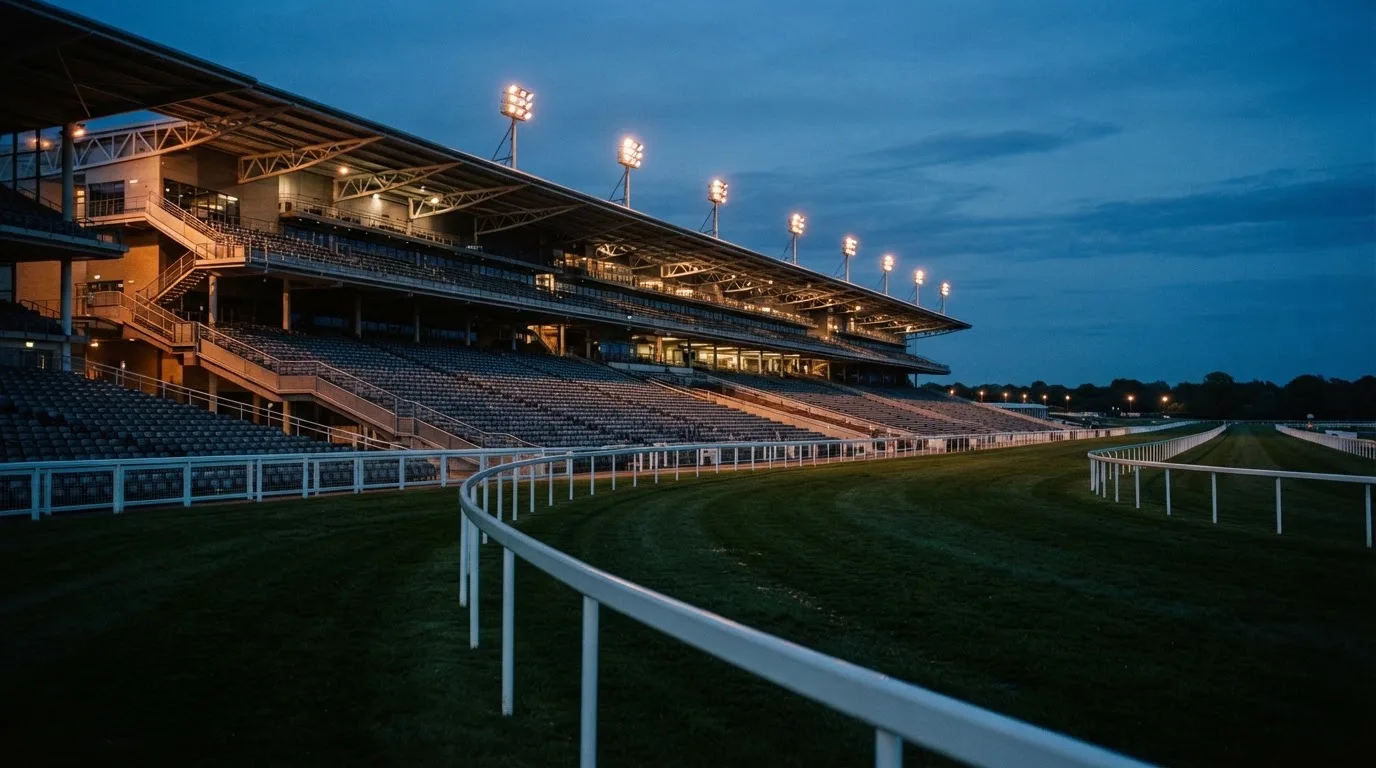
Flat races range from 440 yards (400 m) to more than four miles (6.4 km). The common ground sits between five and twelve furlongs (1.0 to 2.4 km), which is where most televised meetings and most bookmaker markets concentrate. Jump races run further, with staying chases over three miles plus a key part of the National Hunt calendar. Distance is not a footnote in form analysis: a horse bred for speed over six furlongs does not improve when stretched to a mile and a half, and the market knows it. A tipster who does not separate sprinters from stayers is reading the wrong card.
Races split further by weight policy. In handicap races each horse carries a different weight, set by the handicapper to level the field as far as the official can manage it. In conditions races horses carry the same weight, with allowances for younger horses, for fillies and mares against colts, and for other factors the race conditions name. Handicaps make up the bulk of British racing and are the form analyst’s daily work; conditions races are where breeding and class matter more than the figures in the racing post.
Three flat races form the British Triple Crown — the 2000 Guineas, the Derby and the St Leger — run over a mile, a mile and a half, and a mile and six and a half furlongs respectively. Winning all three is rare enough that the achievement has its own cultural weight. For a tipster, the classics are also where prices reflect the field’s class rather than its recent form, because the runners are unexposed and the official figures are short. That makes the classics a hard market to beat with data alone, and a hard market for any tipster to publish numbers on without showing their working.
The landscape: how a tip becomes a price
The horse racing market is layered. At the top sits the bookmaker’s price — the decimal or fraction the punter sees in the betting slip — and underneath it three things determine that price: the form book, the market’s own bets, and the bookmaker’s margin. A tipster who claims to ignore market moves is either working from information nobody else has (which the Gambling Commission’s rules make very difficult to publish legally) or working blind.
Form gives a starting estimate. Past runs, finishing positions, the going (the official description of the ground — firm, good to soft, heavy, and the variants in between), the draw in a flat race (lower draws often have an edge on sharp turning courses), the jockey booking, and the trainer’s record at the course all feed into a hand-built probability. That probability never reaches the betting slip as it stands. It becomes one input among several, weighted against what other punters are backing and against what the bookmaker wants to keep in the book.
Value betting is the discipline of comparing that hand-built probability to the implied probability in the price. Decimal odds of 4.00 imply a one-in-four chance; decimal odds of 2.00 imply evens. A tipster’s edge exists when their own estimate is sharper than that implied line — a horse they reckon at 3/1 (decimal 4.00) but the market has at 4/1 (decimal 5.00) is a value bet, regardless of whether the horse wins that day. The whole point of value is that it does not promise a winner; it promises a long-run return above the margin the bookmaker takes. Lose six out of ten value bets and still come out level if the four winners paid enough.
Betting on the exchanges has reshaped this landscape. On a betting exchange, punters back and lay against each other rather than against the bookmaker’s margin, so the prices are sharper and the commission on winnings is the exchange’s only take. For a tipster publishing prices, an exchange price is a closer read of the market’s true probability than any bookmaker’s price. For a punter copying a tip, the difference matters because a value bet at 4.0 with one bookmaker may be 4.4 at the exchange — the same horse, two different prices, and the spread is the cost.
No tip is ever certain. That is not a legal disclaimer to bury in the small print; it is the structural truth of the market. A bookmaker’s margin is built into every price, the form book is short on unexposed horses, and the favourite wins roughly a third of all races across a season. A tipster’s record is measured over hundreds of bets, not one Saturday’s card, and even then a long-run edge of three or four per cent over the bookmaker is a respectable professional performance.
The statute: what is licensed, what is legal, and what the Gambling Commission does
The commercial betting market in Great Britain runs under the Gambling Act 2005, which covers England, Scotland and Wales. Northern Ireland sits outside the Act under older legislation — a fact that matters when a brand claims a “UK licence” without naming which jurisdiction. Since the Gambling (Licensing and Advertising) Act 2014, an operator whose remote facilities are used in Great Britain needs a Gambling Commission licence wherever the operator itself is based. A Curaçao, Maltese or Gibraltar licence is not a substitute for serving British customers; it is a separate permission issued by a separate regulator.

The Commission’s public register lists every licensed operator by business name, trading name, domain and account number. It is the only test of whether a brand is licensed to take a bet from a customer in Great Britain. The register breaks betting into five licence categories that matter for a punter: remote general betting standard (real events) covers sportsbooks and racing; remote general betting standard (virtual events) covers computer-generated markets; remote general betting limited is the smaller-stake remote licence; remote pool betting covers off-course pool products on horse and dog racing; remote betting intermediary is the exchange category. A brand can hold more than one. None of this is decorative — the register is the legal floor under every stake a punter places.
Since 7 May 2019, every licensed operator must verify a customer’s name, address and date of birth before the first deposit or bet, including with a free bet or bonus. There is no anonymous play at a GB-licensed site. Since 14 April 2020, credit cards have been banned for gambling in Great Britain, including credit-card-funded e-wallet top-ups; debit cards and bank transfers are not covered by that ban. The minimum age is 18. The national self-exclusion scheme is GAMSTOP, a multi-operator online register that every GB-licensed online operator must take part in, with minimum exclusion periods of six months, one year, five years, or five years with auto-renewal.
The Commission’s current player-protection work runs on three layers. The first is deposit limits, which operators must offer to every customer; the rules have been tightening since 31 October 2025 with a further phase scheduled for 30 September 2026, though whether the second phase is now live is not established. The second is the financial vulnerability check, in force since 28 February 2025 once a customer’s net deposits exceed £150 in a rolling 30 days — it is a public-record check for bankruptcies and county court judgments, not an income or affordability assessment. The third is the financial risk assessment regime, announced in stages from July 2026 onwards, with no start date yet set. Worth keeping these in their proper order, because the public conversation tends to flatten them into one.
Bonuses and promotions are now restricted under rules in force since 19 January 2026: wagering on a bonus is capped at ten times its value, and mixed-product promotions — offers that require play across betting, casino, bingo and lottery — are banned. Whether the cap applies to free bets with no wagering condition, and whether there is any cap on the headline money value of a bonus, are not established. No single brand is “the only” licensed operator; the Commission’s register lists far more.
Betting winnings are not taxed on the punter in Great Britain. General Betting Duty is the operator’s tax on gross profits, currently 15% with a remote betting rate rising to 25% from 1 April 2027 on most remote bets, while remote bets on UK horse racing stay at 15%. Whether operators pass the higher rate on through odds is not established. The punter pays no duty on winnings.
Responsible gambling: the cost that does not appear on the betting slip
The numbers on a betting slip describe one transaction. The other cost — the one that arrives in a quiet month after a losing streak, in a sleep that did not happen, in a phone call that should not have been made — is harder to price and easier to ignore. Responsible gambling is the part of the market that addresses that second cost, and it sits as a licence condition rather than a courtesy.
Every GB-licensed operator offers safer-gambling tools: deposit limits, time-outs, product restrictions and self-exclusion. Unibet’s suite, for example, includes deposit limits, a Player Profile test, product restrictions and self-exclusion, alongside live chat support and direct links to BeGambleAware, GamCare, GAMSTOP, Gambling Therapy and the Betting and Gaming Council. That is the expected layout; the question for a punter is whether the tools are set up before the first bet, when the head is clear, rather than afterwards when the chase is on.
GAMSTOP is the centre of the self-exclusion system. Registration covers online sites and apps across every GB-licensed operator that takes part — and every GB-licensed online operator takes part by licence condition. Periods are six months, one year, five years, or five years with auto-renewal, and after the minimum period the exclusion stays in place for a further seven years unless the customer asks GAMSTOP to remove it. Betting shops run a separate offline self-exclusion scheme, which matters because GAMSTOP does not cover them.
The financial vulnerability check, mentioned in the previous section, is the more recent layer. Once net deposits pass £150 in a rolling 30 days, the operator runs a public-record check for markers of financial distress — county court judgments, bankruptcies, the kind of entry a credit file would show but a credit reference check would also surface. It is not an affordability assessment and it is not a credit reference check; it is the lighter of the two regimes the Commission has signalled. The heavier regime, the financial risk assessments, has been announced in stages with no start date yet.
Help exists outside the operators. GamCare runs the National Gambling Helpline. GambleAware funds treatment and research. The NHS runs gambling clinics across several regions. Gamblers Anonymous runs meetings. None of these names appears on a betting slip, and that is partly the point — the slip is the wrong place to look for them.
The honest framing: licensed means the tools exist and the regulator can compel their use; unlicensed means none of them apply and funds withheld by the operator have no British route back. Neither is “the safe choice” by default. The safe choice is set by the punter, before the bet.
Live betting and cash out on horse racing
Horse racing is unusual among major sports for the way its in-play product works. Once a race starts, the betting market closes for that race — there is no in-play price on a horse mid-race in the way there is on a football match, because the outcome resolves in seconds and the prices would have nowhere to go. What an in-play product on racing actually covers is what comes between races: the next race, the next meeting, simulated or live feeds of other events running in parallel, and markets that update as the betting moves on the card.
A few operators run in-play racing in a different sense, pricing the next race while the previous one is still being run, using live pictures and an internal market-making model. The depth of that product varies. A sportsbook that runs full in-play football and tennis but only the ante-post markets on racing is normal; one that runs live pricing between races on the same card is the exception.
Cash out sits at the other end of the in-play product. It lets the punter settle a bet before the race is run, at a price the bookmaker sets. The price is not the same as the bet’s true value at that moment — it includes the bookmaker’s margin and a buffer for the risk the bookmaker is taking off the book. Cash out is a tool, and like any tool it costs what it costs: a useful exit for a bet that has gone wrong, an expensive one for a bet that is going right and looks vulnerable to a late move.
The value of a tipster’s pick does not change because cash out exists. What changes is the punter’s ability to lock in or cut losses partway through. A tipster who tells subscribers to cash out at a specific point in the card is making a market call on top of a form call, and that is a second skill, not the same one.
Strategy: bankroll, staking and the arithmetic of a losing month
The shape of a tipster’s record over a season is closer to a saw-tooth than a curve. Winning runs and losing runs alternate, sometimes sharply, and the punter’s job is to survive the losing runs without changing the staking plan that the winning runs were built on.
Bankroll discipline starts with the unit. A unit is a fixed fraction of the total bank — a per-bet stake the punter would not notice losing, set in advance and not varied by how the previous bet went. Common professional practice is one to two per cent of bank per bet for a tipster being followed at level stakes, with adjustment for confidence only inside that band. The point of the unit is to make a run of losers survivable: a ten-bet losing streak at 2% of bank costs 18% of the bank, not 100%, and that is the difference between recovering and being forced to drop stakes or stop.
Staking plans vary. Level stakes — same unit on every tip — is the cleanest test of a tipster’s edge, because the variance is in the outcomes and not in the stakes. Proportional staking scales the unit up or down with the bank, so a growing bank bets more and a shrinking bank bets less; useful for compounding, dangerous if the bank shrinks faster than the punter can react. Kelly staking — a formula that sets the stake as a fraction of edge divided by price — is theoretically optimal for a known edge and ruinous in practice for a guessed one, because overestimating the edge by a small amount produces dramatically oversized stakes.
A value bet is a price the punter believes understates the horse’s chance, after the bookmaker’s margin is stripped out. It is not a prediction that the horse will win. The same horse at 5.0 with one bookmaker and 4.5 with another is the same probability with two different margins; backing it at the longer price is the only way to capture the edge, if there is one. Chasing a tipster’s tip into a shorter price because the price has moved is a way of paying the bookmaker’s margin for the privilege of betting on the same horse.
The margin is the book’s take. Worked through with the page’s illustrative two-way market at decimal odds of 1.90 / 1.90, the implied probabilities add to 1.0526, giving a payout share of about 95.1% and a margin of about 4.9% — the band sits around 4.5% to 5.5% depending on the exact prices used. A horse race with twelve or more runners carries a much wider margin built into the each-way and place markets, often well above 20% on the place portion alone. The wider the margin, the harder the punter has to work to find value, and the more important the price comparison between bookmakers becomes.
No tip is ever certain, and that is the discipline. A tipster’s record over a hundred bets is what a punter pays for, not a single Saturday’s nap.
How returns are worked out
A single bet pays stake times odds. A £10 stake at decimal odds of 4.00 returns £40, of which £30 is profit; a £10 stake at decimal odds of 2.50 returns £25, of which £15 is profit. The decimal odds carry the stake, so the return is always the larger number and the profit is the return less the stake. This is the only arithmetic a punter needs for a single bet.
An each-way bet is two bets of equal stake — a win bet and a place bet — so the stake is doubled. A £5 each-way bet costs £10. If the horse wins, both parts pay; if it places but does not win, only the place part pays. The place terms determine how many places pay and at what fraction of the win odds, and they vary with the race. For British racing the standard each-way place terms are: handicaps with more than fifteen runners pay a quarter of the win odds for four places; twelve to fifteen runners a quarter for three places; other races with more than seven runners a fifth for three places; five to seven runners a quarter for two places; fewer than five runners win only — no place part pays at all. A worked example: a £10 each-way bet on a 10-1 horse at quarter-odds place terms and three places costs £20 and returns £110 for the win part and £35 for the place part — £145 in total if the horse wins.
A combination bet multiplies the legs. A double’s odds are the two legs multiplied, a treble’s are three multiplied, and an accumulator (“acca”) carries the product of all the legs into one return. A Lucky 15 is fifteen bets across four selections — four singles, six doubles, four trebles and one four-fold accumulator — at a unit stake per bet, so the total stake is fifteen times the unit stake. The full-structure bets are useful for finding a return from a card where no single horse looks like a winner at the price; they are expensive, because the total stake multiplies up, and the bookmaker’s margin compounds across every leg.
A free bet is a credit, not a gift. The stake is usually not returned with a winning free bet, so the value of a £10 free bet at decimal odds of 4.00 is £30, not £40. That makes the price of the selection important in a way it is not for cash: a free bet at short odds is worth less than its face value, and the marketing that boasts of a “£50 free bet” is stating a headline that the terms reduce once the bet is placed. A free bet is also time-limited, typically seven days from issue, and may carry minimum odds. The same wording applies each time a free bet is described on this page.
The ranking: ten UK-licensed bookmakers reviewed for the punter who follows racing tips
Ten operators hold a Gambling Commission remote licence and run a horse racing product aimed at British punters. They are not ranked by quality — no single brand is the only licensed one, and a place in this comparison is not a licence. They are reviewed for the cost the punter pays to follow a tipster’s selections through them, and for what each operator’s own terms state on the subject of racing, value and protection.
The licence numbers below come from the Gambling Commission’s public register; the racing and offer details come from each operator’s own site or app listing. No brand is reviewed beyond the four confirmed cards above. Where a card is unverified, the page says so.
| Brand | Gambling Commission remote licence and holder | What the operator’s own terms state on racing and tips |
|---|---|---|
| Geoff Banks | 054095-R-330366-010 · GB Sports Advisors Limited | Live in-play prices and ante-post prices on future events, published through the GB app |
| Star Sports | 009177-R-104555-019 · Star Racing Limited | Self-described as the UK’s leading independent bookmaker, with virtual sports and casino alongside the sportsbook |
| Fitzdares | 000400-R-103839-030 · Fitzdares Limited | Cash out, accumulators, Lucky 15s, specials and ante-post on horse racing, football, tennis, rugby, cricket, golf and American football, with in-play live odds |
| Octobet | 062545-R-337248-006 · Octopus Game Limited | Best Odds Guaranteed on UK and Irish horse racing, up to £150 per customer per race |
| Midnite | 101839-R-342850-001 · Midnite Limited | In-play events, acca builder, popular accas and price boosts with stated maximum-stake limits; welcome offer of £5+ at evens (2.0) or greater within 14 days for £25 in free bets and 50 free spins, valid seven days |
| Dabble | 065677-R-340363-005 · Dabble Sports UK Ltd | Welcome offer of £10 in free bets on a first deposit of £10, with minimum odds, seven-day expiry and stake not returned |
| Fitzwilliam Sports | 048760-R-335434-009 · SBKI Limited | Phone and live chat with the office open 09:00 to 21:00 Monday to Sunday, messenger replies generally within 90 seconds |
| Vbet | 044662-R-324273-022 · SCGO Limited | Bet Builder, pre-match and in-play betting, live streaming and a live calendar with results and stats |
| London Bet | 066162-R-340278-004 · Thistle Bet Limited | Sports betting on football, tennis, horse racing, greyhounds, darts, golf, cricket, NFL, NBA, MLB and snooker, with casino slots and live in-play betting |
| Ladbrokes | 054743-R-330863-014 · LC International Limited | Odds boosts on horse and greyhound bets, Best Odds Guaranteed on UK and Irish horse racing, in-play betting and Acca Boosts |
Geoff Banks — for the punter who wants a small independent’s ante-post book
Geoff Banks’ app is published by GB Sports Advisors Limited under Gambling Commission account 54095 and lists live in-play prices alongside ante-post markets on future events. That second feature is the part that matters for a tipster follower: ante-post is where the early price lives, before the market has shortened on the day, and a tipster’s pick placed at the longer ante-post price is the cleanest value bet available. The card carries the licence, the in-play line and the ante-post line, and stops there. Smaller independent books often run a thinner each-way place market than the major operators, so the punter checking a Lucky 15 or a Patent should compare place terms before placing.
Star Sports — for the punter who wants the high-street bookmaker feel on the phone
Star Racing Limited runs Star Sports under Gambling Commission account 9177 and describes itself as the UK’s leading independent bookmaker, with virtual sports and casino sitting alongside the sportsbook. The racing card is the centre of the offer for a tipster follower, and the casino sits beside it rather than the other way round — a layout that suits a punter who wants the betting slip as the front of the app rather than a casino lobby with racing somewhere behind. What is not on the card is the welcome bonus detail, and the absence is worth noting rather than glossing.
Fitzdares — for the punter who wants Lucky 15s and specials priced into a single screen
Fitzdares Limited runs the brand under Gambling Commission account 400 and offers cash out, accumulators, Lucky 15s, specials and ante-post markets on horse racing and the major sports, with in-play live odds. That card is the most explicit structure of the ten for the punter who follows combination bets. Lucky 15s are fifteen bets at a unit stake across four selections, and a tipster card with four short-priced fancies is the natural fit for that product — though the total stake of fifteen units is the cost the punter pays for the structure, and that cost is not in the marketing line. A punter who picks a tipster card and runs it through a Lucky 15 at Fitzdares needs to know the unit stake before the bet is placed, not after.
Octobet — for the punter who backs UK and Irish racing and wants the price floor
Octopus Game Limited runs Octobet under Gambling Commission account 62545 and runs Best Odds Guaranteed on UK and Irish horse racing, up to £150 per customer per race. BOG is the rule that pays the bigger of the price taken and the starting price (SP) when the horse wins, and it is the single most useful concession a racing punter can have, because it removes the timing risk from backing the morning of the race. The £150-per-race cap is the ceiling on that protection — a stake above it is unprotected on the difference, and the punter placing a tip at a longer price earlier in the day needs to know that any portion above the cap carries the SP risk.
Midnite — for the punter who wants acca builders and price boosts with stated stake caps
Midnite Limited runs Midnite under Gambling Commission account 101839 and lists in-play events, an acca builder, popular accas and price boosts with maximum-stake limits. The welcome offer — £5 or more on pre-match odds of evens (2.0) or greater within 14 days of sign-up for £25 in free bets and 50 free spins, valid for seven days — is one of the more transparent on the list, and the stake-not-returned wording on the free bet is exactly the kind of term that decides whether the offer is worth taking. The price boosts with maximum-stake limits are the section to read carefully: a boosted price is worth nothing if the stake cap is below the punter’s unit, and that combination is more common than the marketing suggests.
Dabble — for the punter who wants a clean £10-for-£10 free bet structure
Dabble Sports UK Ltd runs Dabble under Gambling Commission account 65677 and runs a welcome offer of £10 in free bets on a first deposit of £10, with minimum odds, a seven-day free bet expiry and the stake not returned. That last clause is the one that flattens the headline: a £10 free bet at decimal odds of 3.00 pays £20 of winnings, not £30, because the £10 stake is not returned. The minimum odds determine whether the tipster’s pick qualifies at all, and a tip at 1.5 (short odds) is exactly the sort of selection the marketing would prefer the punter to forget.
Fitzwilliam Sports — for the punter who wants to phone the bookmaker during the racing
SBKI Limited runs Fitzwilliam Sports under Gambling Commission account 48760 and offers phone and live chat with the office open 09:00 to 21:00 Monday to Sunday, with messenger replies generally within 90 seconds. For a punter who follows a tipster card and wants to place a complex combination bet by voice rather than tap — a Yankee, a Goliath, a trixie with a non-runner adjustment — a phone desk is the route, and the published opening hours are the part that decides whether the bookmaker is usable on a Sunday evening. The racing product is not detailed on the card beyond the contact line, so the punter should confirm each-way place terms and BOG availability in the operator’s terms before staking.
Vbet — for the punter who wants Bet Builder and live streaming on the same screen
SCGO Limited runs Vbet under Gambling Commission account 44662 and offers Bet Builder, pre-match and in-play betting, live streaming and a live calendar with results and stats. Bet Builder is the same-game-multi product that lets a punter combine markets on one race — finish position, distance, going — into one price; it is a different product from an accumulator, which combines selections across races. For a tipster follower, the value of Bet Builder on a single race is limited unless the tipster publishes a per-market view; the punter placing the bet is the one building the combination, and the margin compounds across every leg of the build.
London Bet — for the punter who wants horse racing alongside casino and greyhounds on the same app
Thistle Bet Limited runs London Bet under Gambling Commission account 66162 and combines sports betting on football, tennis, horse racing, greyhounds, darts, golf, cricket, NFL, NBA, MLB and snooker with Pragmatic Play casino slots and live in-play betting. The racing card sits inside a wider product, and that is the trade-off: the punter looking for a pure racing book will not find one here, and the punter who wants racing plus a slot session between races will. The licensed framework applies across the whole product, including the casino, and the safer-gambling tools cover every category.
Ladbrokes — for the punter who wants the major-chain product with odds boosts and BOG on UK and Irish racing
LC International Limited runs Ladbrokes under Gambling Commission account 54743, with odds boosts on horse and greyhound bets, Best Odds Guaranteed on UK and Irish horse racing, in-play betting and Acca Boosts. The card carries the deepest racing product of the ten, with BOG as the floor and the odds boosts as the variable on top. The risk is the dual structure too: an Acca Boost is a marketing line on a product whose margin compounds across every leg, and the punter taking the boost pays the spread in the place terms and the leg prices. The honest reading is that Ladbrokes is the book to take a tipster’s nap on a Saturday, where the price floor matters more than the convenience of a smaller app.
How to read this comparison
Ten operators, ten licence cards, ten slightly different racing products. The comparison is built around three questions a punter who follows tipsters actually asks. Does the operator hold a current Gambling Commission licence that protects this stake? Does the operator’s racing product carry the structure the punter wants to run — single, each-way, combination, ante-post? Does the welcome offer or concession carry terms that cost more than they look?
The licence column answers the first. Every operator in the table holds a current remote licence on the register, and the operator’s legal name is the name on the licence card, not the trading name — a difference that matters when a brand is part of a group with several trading names under one licensee. The product column answers the second, with what each operator’s own listing states. The terms column answers the third, with the published clauses that decide what an offer costs in practice.
The third column is the one the marketing avoids. A “free bet” with the stake not returned is not £30 of value at decimal odds of 4.00 — it is £20, and that is the figure the punter should be working with. A “100% bonus” with a 10x wagering requirement (the new cap) needs at least £100 of qualifying bets per £10 of bonus, and the qualifying bets carry the bookmaker’s margin, so the bonus costs roughly the margin per £10 wagered. An “odds boost” with a maximum stake limit is a concession that exists for a stake size, not for a punter’s unit, and the punter whose unit is above the cap gets nothing from the boost.
The honest reading is that no operator in this list is the right answer for every punter. The right answer is the operator whose licence is current, whose product matches the punter’s staking plan, and whose terms the punter has read before placing.
What a tipster is, and what a tipster is not
A tipster is a publisher of opinions on outcomes. In racing, that means publishing horses to back, sometimes with a staking plan, sometimes with a price guide, sometimes with a confidence rating. The publication can be free — a tipster on social media, a column in a racing paper, a YouTube channel — or paid through a subscription or a one-off fee. The Gambling Commission does not regulate tipsters as such; what it regulates is the operator who takes the bet. A tipster publishing picks for a fee is selling a service, and the contract behind that service is consumer law rather than gambling law.
A tipster is not a guarantee. A tip is one person’s view, built from the form book, the market and the price, and the only test of a tipster’s edge is the long-run record at the prices they recommend. A tipster with a 25% strike rate at average odds of 4/1 (decimal 5.00) is break-even before margin; the same strike rate at average odds of 6/1 (decimal 7.00) is profitable after margin. A tipster publishing picks without prices is publishing opinions without the arithmetic to back them up, and the punter should price each pick themselves at the betting slip.
The matched-betting tipster is a different animal. Matched betting is the practice of backing an outcome at the bookmaker and laying it at the exchange to lock in a small profit from a free bet or bonus, regardless of the outcome. It works only because the bookmaker’s offer covers the exchange liability on one side. The Gambling Commission treats offers with a 10x wagering cap as a separate category of promotion, and matched betting has tightened as a result. Where matched betting still works, it works at the cost of holding accounts at multiple operators and the time to place the layers; where it does not, the welcome offer has been cut to make it unprofitable.
The odds and the margin: a worked read
Decimal odds of 2.00 mean the punter’s stake returns twice the stake, profit equals the stake. Decimal odds of 4.00 mean the return is four times the stake and the profit is three times. The implied probability — the chance the price suggests — is the reciprocal of the decimal odds: 2.00 implies a 50% chance, 4.00 implies a 25% chance. Bookmaker prices do not add up to 100% of probability across a market; they add up to more, because the margin sits inside them. A two-way market priced at 1.90 / 1.90 implies 52.6% on each outcome, adding to 105.3% across the market. The 5.3% figure is the overround, which is the sum of the implied probabilities minus 100%, while the margin is 5.0% — the bookmaker’s expected profit per pound staked across the two outcomes.
The page’s illustrative two-way market at decimal odds 1.90 / 1.90 is an example, not a quoted price. Worked through: each leg’s reciprocal is 1 ÷ 1.90 ≈ 0.5263, so the implied probabilities add to 1.0526, giving a payout share of about 95.1% and a margin of about 4.9%. The exact band depends on the prices used; for a market priced at 1.85 / 1.85 the implied total is 1 ÷ 1.85 + 1 ÷ 1.85 ≈ 1.0811, a margin of about 8.1%; for 1.95 / 1.95 the total is 1.0256, a margin of about 2.6%. A fair margin sits around 4% to 6% on a typical football match; horse racing place markets run higher because the each-way and place book carries a wider spread across the field.
The margin is the book’s take. Every price a bookmaker publishes already carries it. The punter’s job is to find prices that beat the margin — either by shopping between bookmakers for a longer price on the same horse, or by using an exchange where the margin is replaced by a small commission on winnings. A punter taking a tipster’s pick at the first price they see is paying the margin without checking the alternatives, and that is the cost the punter is most often paying without knowing.
Value, variance and the long run
A value bet is a price that is longer than the probability the punter believes. The horse may not win, and indeed most value bets do not win on the day. The edge is in the long-run return, which is positive if the tipster’s probability estimates are sharper than the market’s. A punter with a real edge at 5% over the bookmaker’s margin is making 5p per pound staked in steady-state, before variance; a punter without an edge is paying the bookmaker’s margin and slowly bleeding the bank.
Variance is the noise in the short-run record. A tipster with a real edge will still lose in any given month, sometimes sharply, because horses do not run to form every Saturday. The professional test is not whether the tipster is currently winning; it is whether the tipster’s record over the last 200 or 500 bets is in line with the edge they claim. A punter who panics and changes tipsters after a bad week is paying the variance twice — once to the outgoing tipster and once to the incoming one — and the bank never finds the long run.
Staking plans exist to smooth the variance. Level stakes keep the bet size constant; proportional stakes scale the unit with the bank; Kelly stakes scale the unit with the edge estimate. Each plan has a place. None of them turns a losing tipster into a winning one; the punter’s job is to find a tipster with a real edge, stake to it, and survive the losing runs that the edge produces along the way to the long run.
How to use this page
The page is built around three uses. First, a punter choosing a bookmaker can read the comparison table to see which operators hold a current licence and what each one’s racing product carries, then read the licence number against the Commission’s own register to confirm. Second, a punter following a tipster can use the odds and margin section to price the tipster’s pick at the betting slip and to compare that price between bookmakers. Third, a punter who wants to understand how a betting offer actually costs what it costs can read the bonus and free bet section, then read the operator’s own terms before claiming.
The page is not a tip sheet. No horse is named as a bet, no race is picked as a winner, no odds are published as a recommendation. The arithmetic in the worked sections is illustrative — it shows how a margin is built into a price, how an each-way bet pays, how a free bet’s headline value is reduced by the stake not being returned. None of it tells the reader which horse to back.
The honest reading is that tipsters are sold, betting is paid for, and the long run belongs to whichever side prices more sharply. The punter who reads the small print, prices each pick themselves and stakes to a plan is the one who finds the long run.
Frequently asked questions
How do you become a betting tipster?
A tipster is a publisher of picks, and becoming one in Britain is not a regulated activity in itself — the Gambling Commission regulates the bookmakers, not the tipsters. What it takes to become a tipster is a method for estimating probability (form, statistics, market reads), a record-keeping system to measure that method against outcomes, and a publication channel (a subscription site, a column, a social media account) to reach punters. The harder part is the third, because the long-run record is what sells a tipster and the long run takes hundreds of bets to establish. A new tipster with no track record is selling an opinion, not a record.
Who is the best betting tipster?
There is no answer, and the framing of the question is the warning. “Best” by what measure — strike rate, return on investment, longest winning streak, longest losing streak avoided? Each tipster will have a different answer depending on how their record is sliced, and a tipster whose numbers look best over a hundred bets may look ordinary over five hundred. The honest test is whether the tipster’s record is published in full, with prices and stakes, over enough bets to be statistically meaningful, and whether the prices are the prices the tipster actually recommended rather than the prices the punter happened to take.
What is a tipster in betting?
A tipster in betting is a person or service that publishes predictions on the outcomes of events for other people to bet on. The tipster’s product is the prediction, with or without a price guide, and the tipster is paid either by subscription, by tip-of-the-day fee or by affiliate commission from the bookmaker. The tipster is not the bookmaker and is not regulated as a bookmaker; the contract is consumer law rather than gambling law.
What is a value bet, and why is no tip ever certain?
A value bet is a price that is longer than the probability the punter believes the outcome carries. The horse may still lose; indeed most value bets lose on the day. The edge is in the long run, where a tipster with a sharper estimate of probability than the market will return more than the bookmaker’s margin over hundreds of bets. No tip is certain because horse races involve live animals on live ground and the form book only goes so far — a horse that looks sure on paper can be slowly away from the stalls, blocked for a run, or unsuited by a change of trip, and the price adjusts to none of it until after the race.
What is the bookmaker’s margin and how can it be seen in the odds?
The bookmaker’s margin is the bookmaker’s expected profit per pound staked across a market, built into every price the bookmaker publishes. It can be seen by adding the implied probabilities of every outcome in the market — the reciprocal of each decimal odds — and subtracting 100% from the total. A two-way market priced at 1.90 / 1.90 implies 52.6% on each outcome, a total of 105.3%, an overround of 5.3%, and a margin of 5.0%. The wider the margin, the more the punter has to beat to find value, and the harder the comparison shopping between bookmakers becomes.
How is the return on a bet worked out from the stake and the odds?
A single bet pays stake times decimal odds. A £10 stake at decimal odds of 4.00 returns £40, of which £30 is profit and £10 is the stake returned. For a combination bet the odds of the legs multiply, so a double at 4.00 and 3.00 carries combined odds of 12.00 and a £10 stake returns £120. For a free bet the stake is usually not returned, so a £10 free bet at decimal odds of 4.00 returns £30 of winnings, not £40. The arithmetic is the same; the stake-not-returned clause is what changes the figure the punter should be working from.
Horse racing & greyhounds – Lowdepositbetting.com
Content created by the «Lowdepositbetting.com» team
